-
Wind & Storm Damage Roof Insurance Claims in Erie, PA
Getting Wind and Storm Roof Damage Properly Claimed in Erie
Lake Erie gives wind a long, open runway before it reaches the shoreline, and buildings along the bayfront take gusts that inland structures rarely see at the same intensity. Add the region's frequent severe thunderstorms in warmer months, and wind is one of the more common reasons Erie commercial roofs end up in a claim. Getting that claim right starts with documenting exactly what the wind did, not with guessing at a repair scope after the fact.
Where Wind Damage Concentrates on an Erie Roof
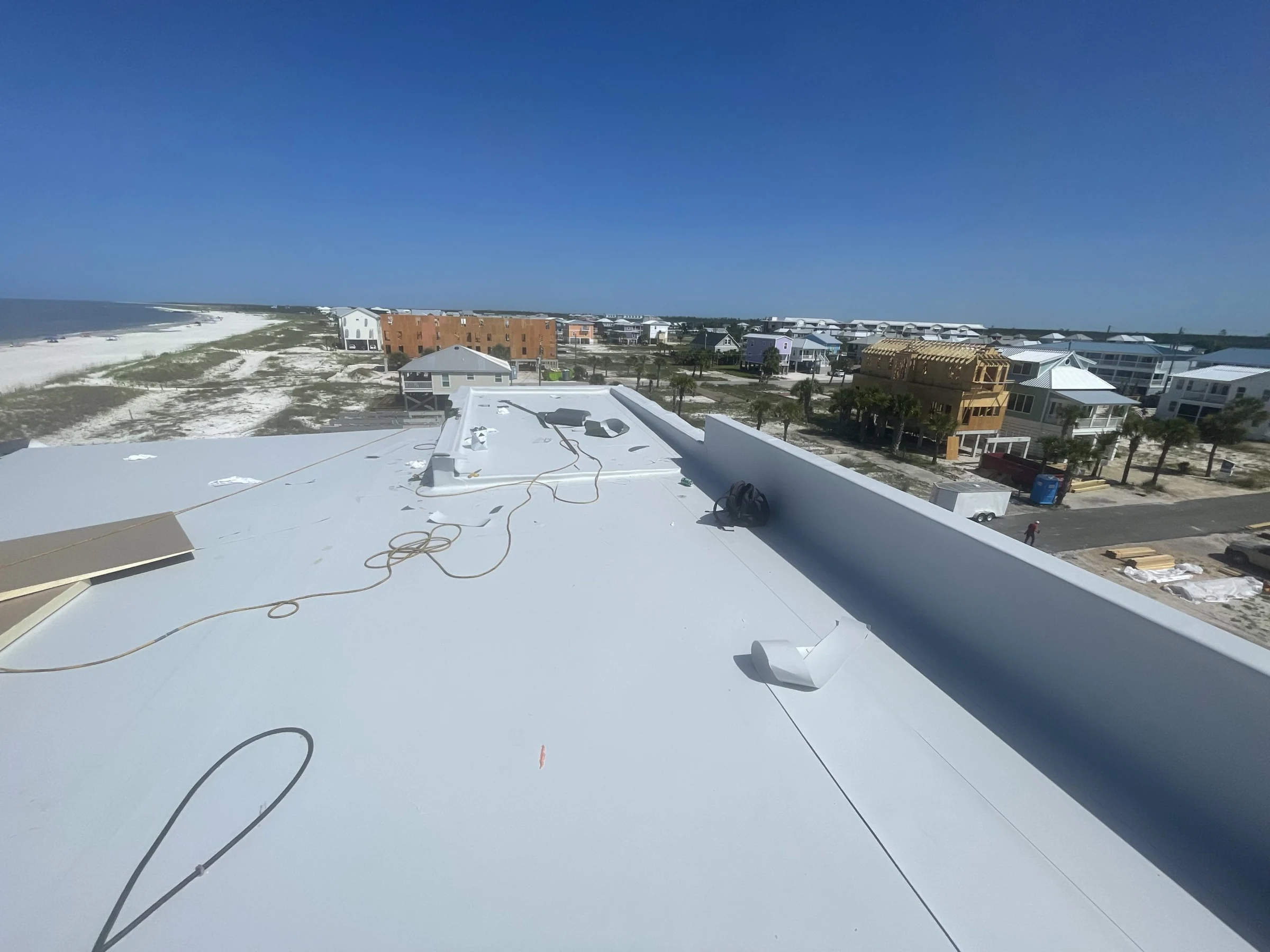
We see membrane lift and edge metal failure concentrate at corners and parapets more than in the open field of the roof, which is consistent with how wind uplift actually loads a low-slope membrane. Buildings closer to the water take this harder and more often, though a strong frontal system moving through can still produce damaging gusts well inland. Coping, fascia, and mechanical curb flashing are common failure points we document after any significant wind event, along with rooftop unit anchoring, which can work loose under repeated gust loading even when the membrane around it looks intact.
Documenting Wind Damage the Way a Claim Needs
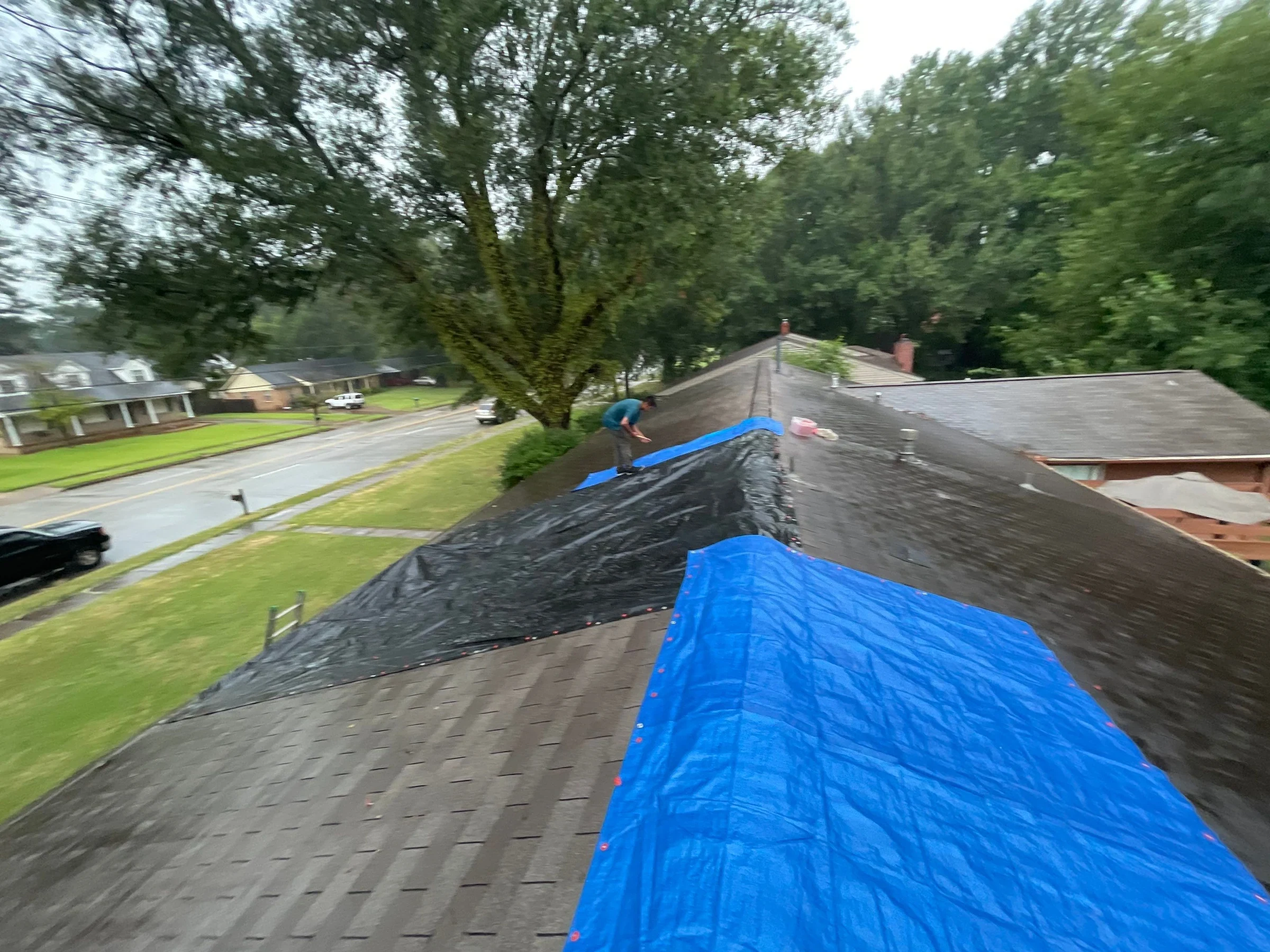
We photograph lifted or torn membrane, displaced edge metal, and any debris impact damage as soon as it's safe to access the roof, with reference points so scale is clear in the photos and an adjuster can tell the difference between a small localized failure and a section-wide problem. We measure the extent of the affected area rather than describing it generally, and we note the storm's general timing so the damage narrative lines up with an actual weather event on record. Where wind has opened the roof to active leaking, our emergency tarp and dry-in crews secure it first, and we document conditions before that temporary work begins.
What Wind Claims Commonly Miss
A partial repair after a wind event sometimes isn't the full honest scope. If wind has compromised the perimeter attachment along one edge, code often calls for bringing that whole edge detail up to current standard rather than patching the torn section alone, and a repair that stops short of that can leave the roof vulnerable at the next storm. We itemize those code-driven items separately in our assessment so the scope reflects everything the roof actually needs, beyond what's visibly torn. Insurers don't always include code-upgrade coverage automatically, so having that item clearly documented and separated from the base repair cost gives an owner the clearest shot at getting it recognized as part of the claim rather than an out-of-pocket add-on.
What a Complete Wind Damage Claim File Includes
- Dated photos of membrane lift, tears, and displaced edge metal or coping
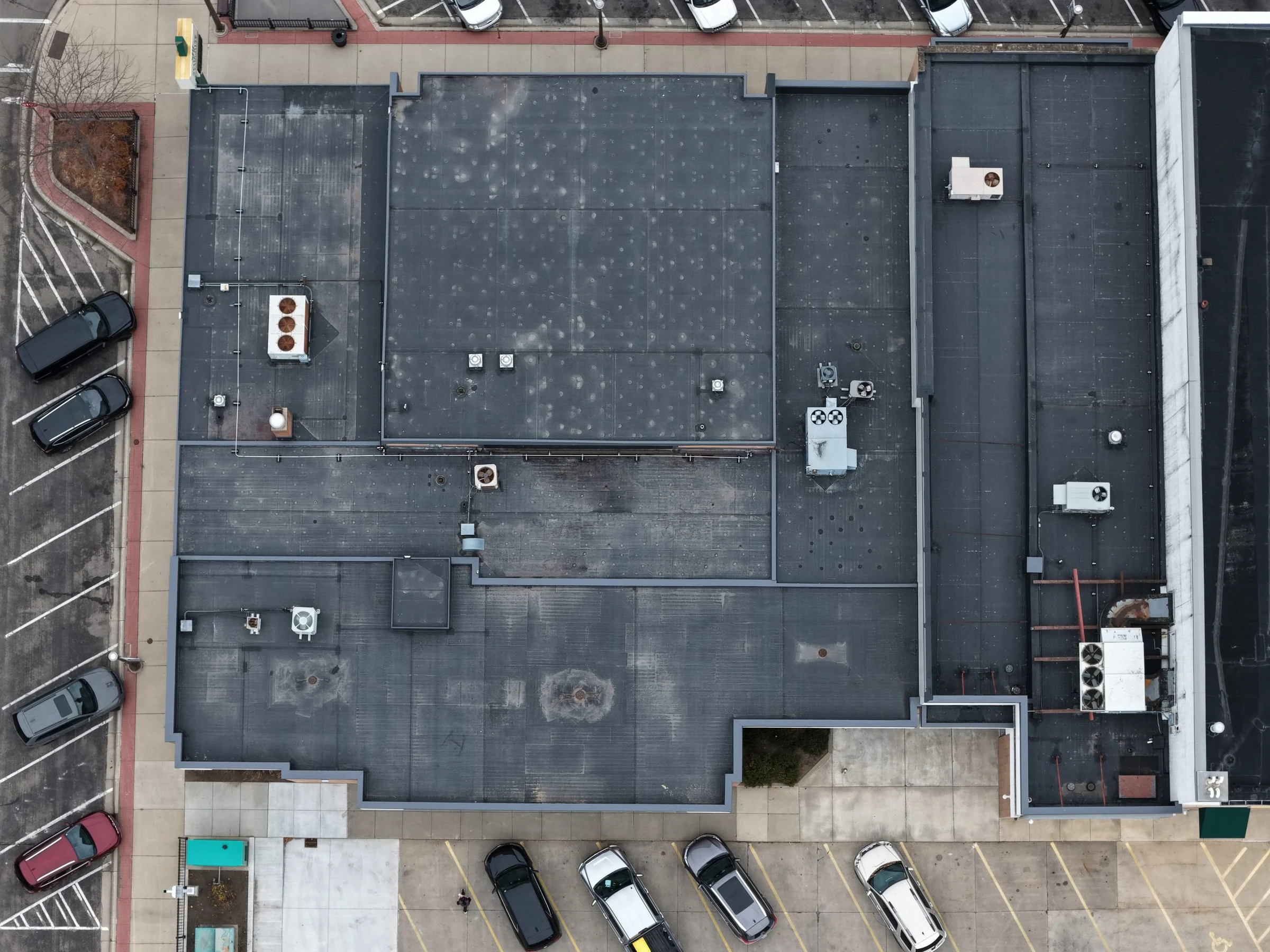
- Measurements of the affected roof area and perimeter attachment condition
- Photos of any debris impact damage and its likely source
- Notes on the storm's general timing and observed wind direction
- A repair scope that includes code-required perimeter or fastening upgrades where applicable
Bayfront Buildings vs. Inland Erie County
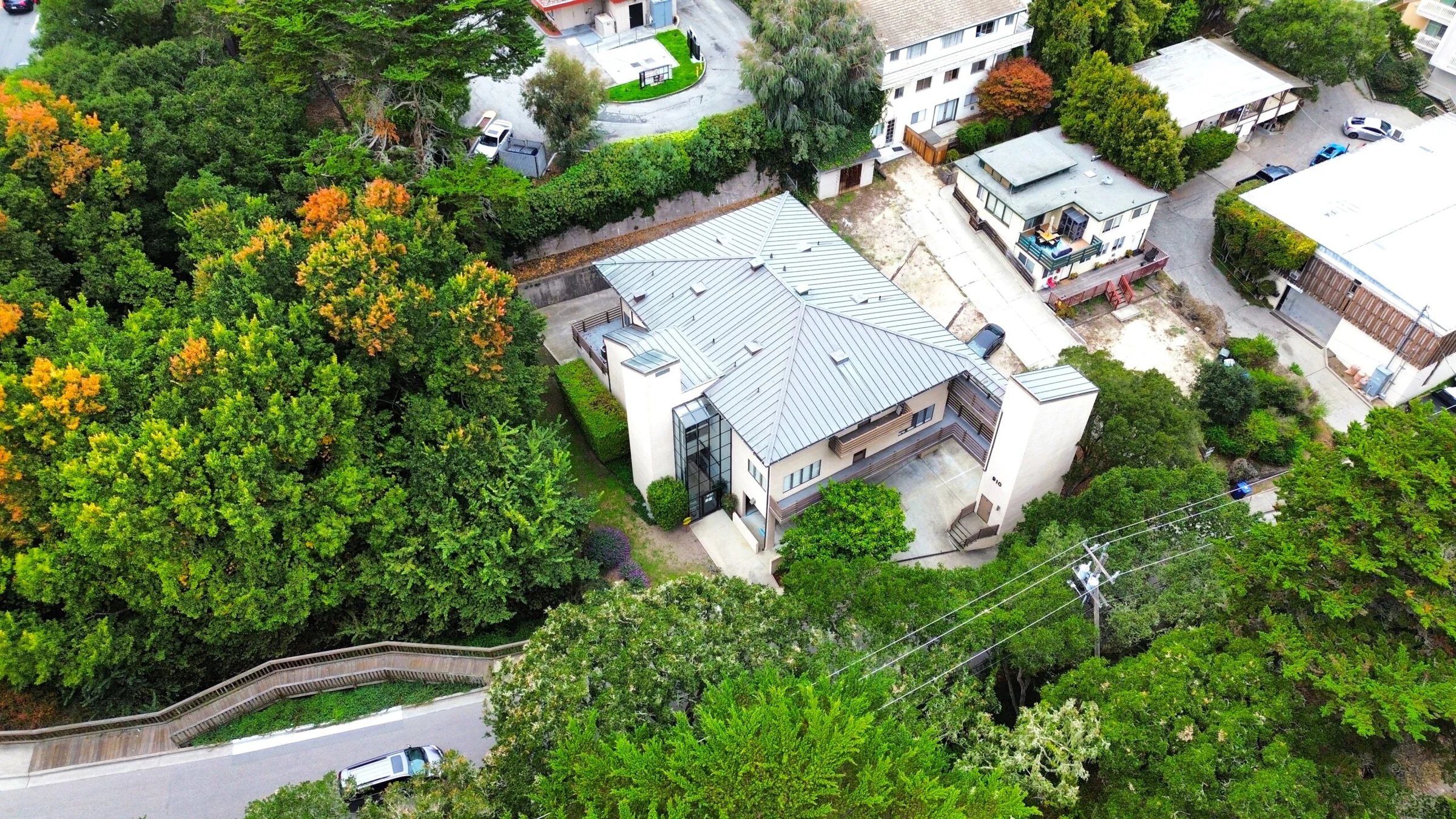
The difference between a bayfront building and one further inland toward Summit Township or Waterford is more than a general rule of thumb — it shows up directly in claim documentation. A roof near the water with a long, uninterrupted fetch across Lake Erie sees higher sustained wind speeds during the same regional storm than a building shielded by terrain and structures further from the shoreline. We note a building's exposure in our assessment, because it's part of the factual context that helps explain why two properties can come out of the same storm with very different damage.
When a Wind Claim Is Denied or Reduced
Carriers sometimes push back on wind claims by attributing edge or seam failure to installation age rather than the storm. Where our inspection supports a different conclusion, we provide a written comparison with photos tied to each disputed point for the owner to bring back to their adjuster. We don't negotiate the settlement or promise a particular result — that determination stays with the owner and the carrier. Our job is making sure the documented facts about wind speed, damage location, and installation age are accurate and complete enough that the discussion happens on solid ground.
We're your roofing contractor, not a public adjuster — we document and substantiate the roof damage so you and your adjuster work from an accurate scope.
Wind and Storm Claim Questions Owners Ask
How is wind damage different from hail damage in a claim?
Wind typically shows as lifted, torn, or displaced membrane and metal, while hail shows as surface bruising or impact marks. We document each differently because adjusters look for different evidence.
Do you work with adjusters directly after a wind claim is filed?
We can walk the roof with an adjuster and answer factual questions about the documented damage, whether that's arranged through the owner or directly.
Will a partial roof repair be enough after wind damage?
Sometimes, but not always. Where code requires upgrading the whole perimeter detail rather than a small patch, we note that in the scope so it isn't left out of the claim.
How fast should we document damage after a windstorm?
As soon as it's safe. Debris, additional weather, and temporary repairs can all change what's visible within days of the original event.
Can older roofs still get wind claims approved?
Yes, when the damage is clearly storm-related and documented as such. We're upfront where age complicates that determination so the claim isn't built on an unclear record.
Ready to review the roof scope?