-
Commercial Reroofing in Erie, PA
Reroofing Erie's Industrial and Institutional Buildings
We reroof low-slope commercial buildings across Erie, from Wabtec-scale industrial plants to office parks near the bayfront, working through lake-effect snow loads, freeze-thaw cycles, and the tight construction windows this climate leaves us. Every reroof starts with a real look at the existing deck and insulation, not a guess from the parking lot.
Deciding Between a Recover and a Full Reroof
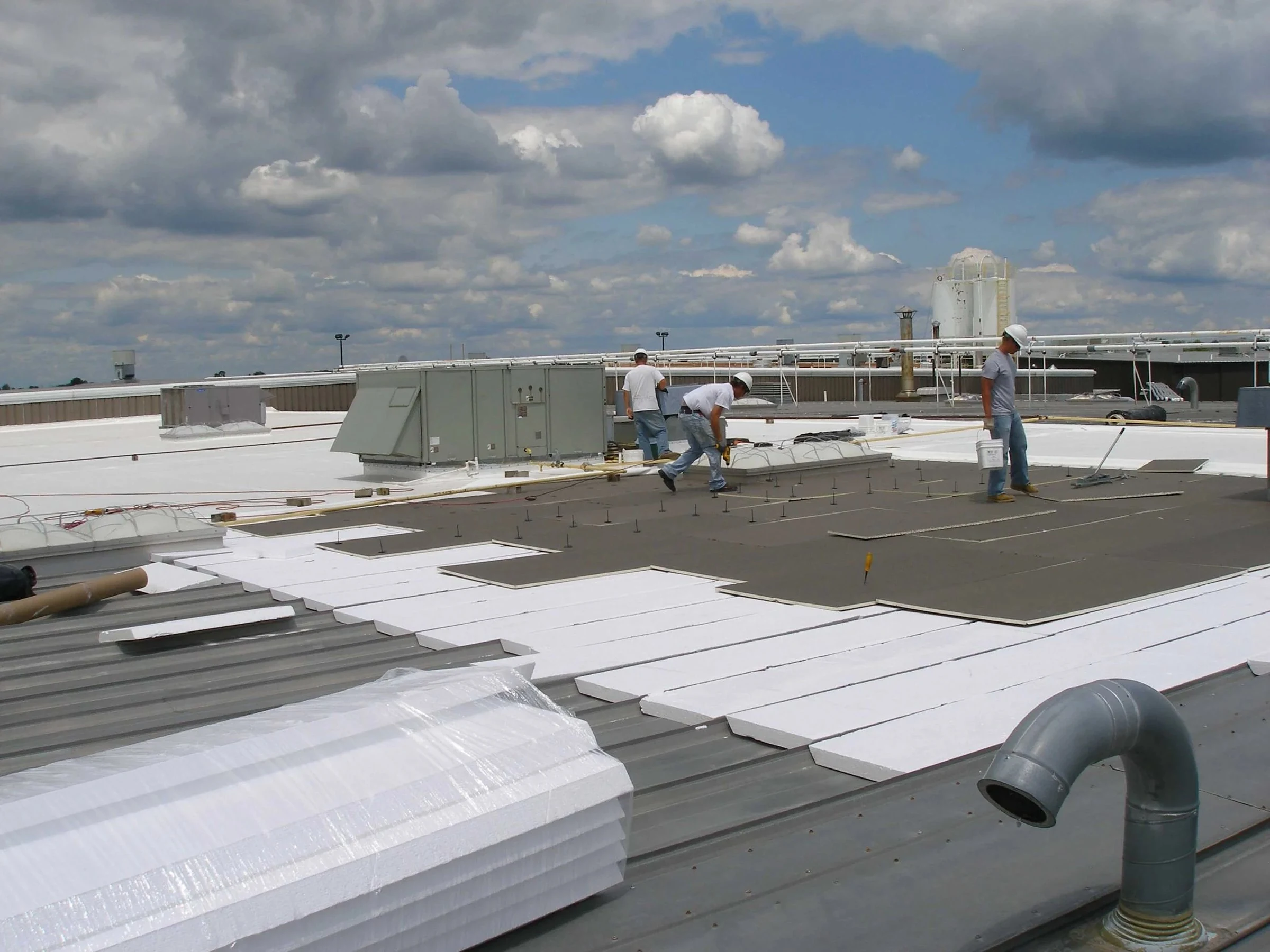
A recover — a new membrane installed over an existing roof that's still dry and structurally sound — costs less and disrupts the building less than a full tear-off. It only works if the old roof passes a moisture scan and the deck underneath can carry the added weight. On many of Erie's older plastics and manufacturing buildings, that's the first question we answer, because a roof that looks fine from below can be holding water in the insulation from a decade of ice dams working at the parapets.
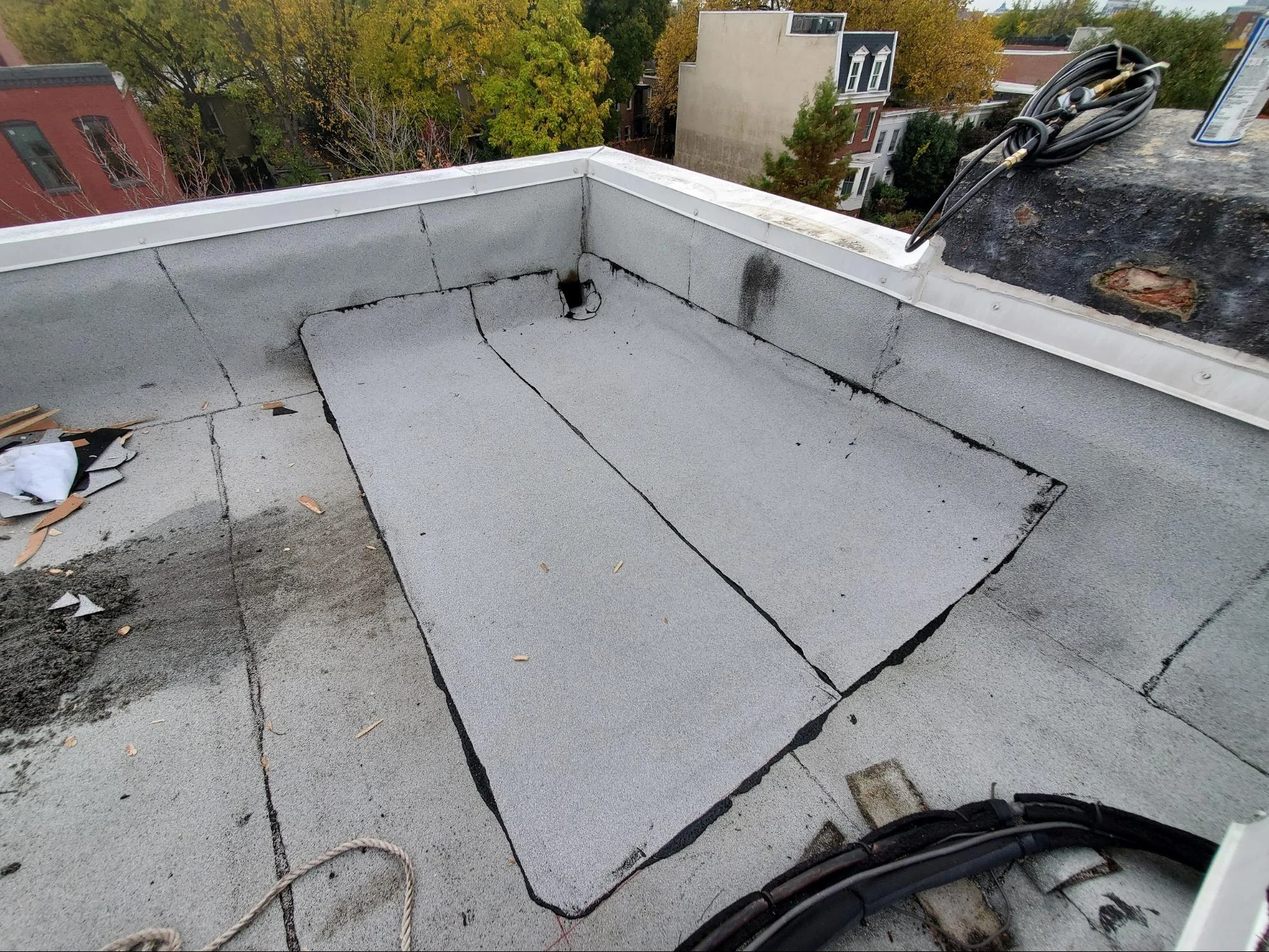
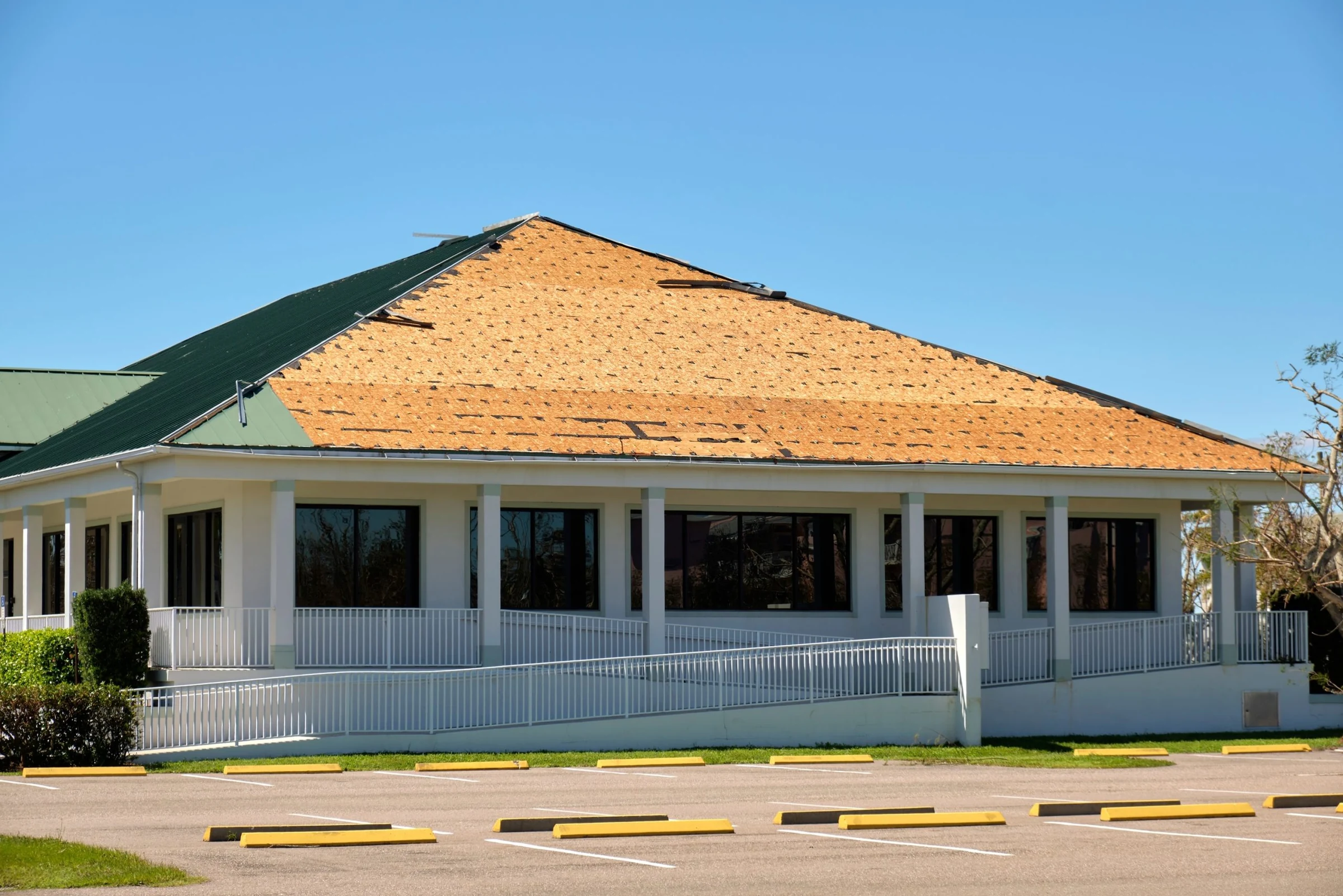
A full reroof strips everything down to deck, replaces wet or crushed insulation, and starts the assembly clean. We recommend it when a moisture scan shows saturated insulation across more than a small portion of the roof, when the deck has corrosion or rot, or when the building already carries two membrane layers and code won't allow a third. We walk owners through both numbers side by side rather than pushing straight to the bigger job.
What We Check Before We Write a Scope
Before we quote anything, we walk the roof and check drainage, seam condition, flashing at every penetration, and the parapet coping that takes the brunt of wind coming off the lake. We probe insulation at several points beyond where a stain shows up inside, because water moves sideways under a membrane before it ever drips through a ceiling tile.
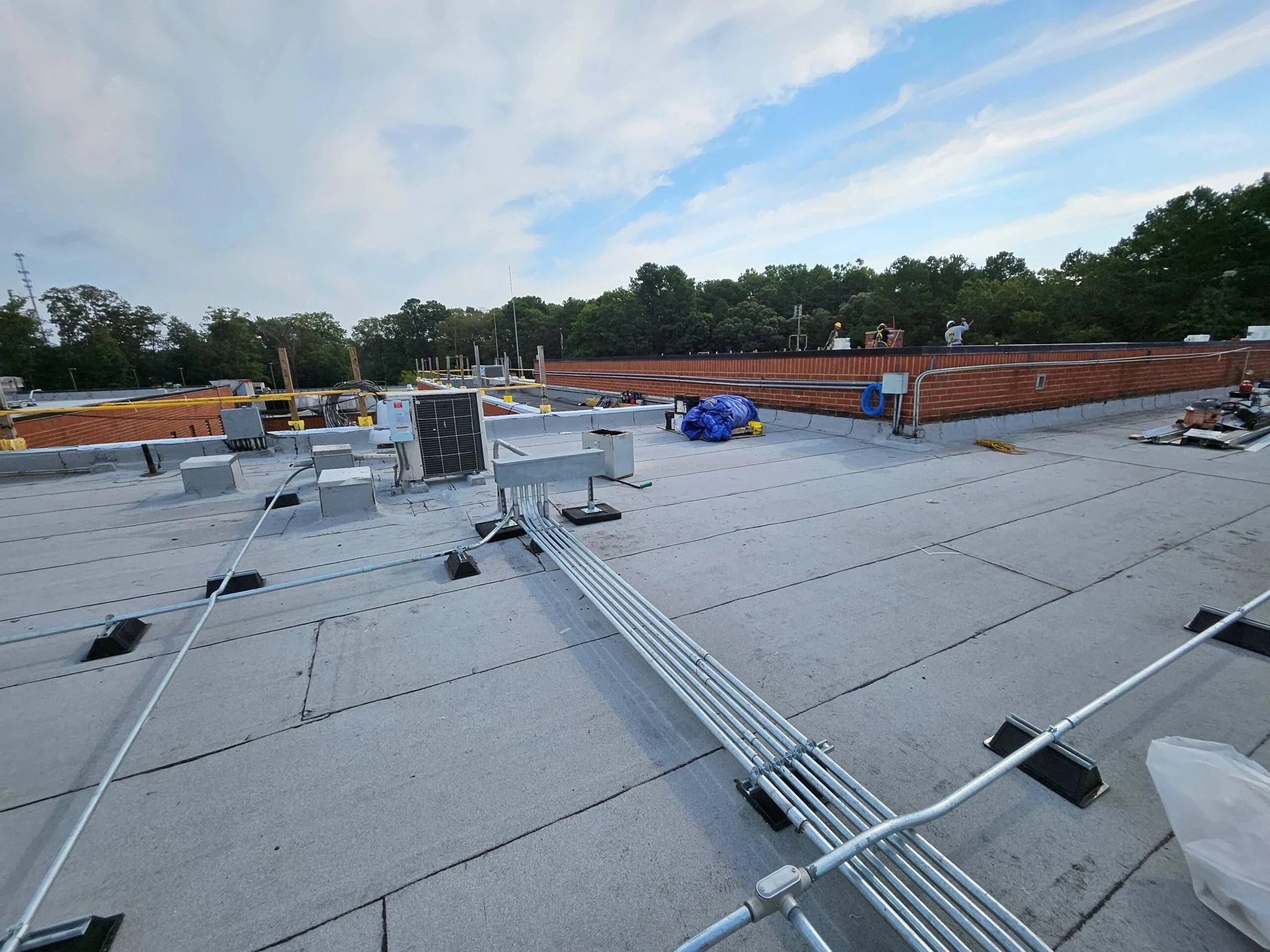
We also look at what's mounted on the roof — rooftop units, exhaust fans, conduit runs — because every curb and penetration is a place water can get in, and every added pound of equipment changes the load math for a new assembly. On plants near the Wabtec corridor and the plastics manufacturers scattered through the city, rooftop equipment tends to be dense, so this step takes longer than it does on a simple retail box.
Insulation and Reflectivity Choices That Change Your Heating Bill
Erie is a heating-dominated climate more than a cooling one, so the insulation package matters more here than the membrane color. We size polyiso thickness to the R-value the building actually needs, not the minimum that gets a permit signed, because every point of R-value on a roof this size shows up on a winter gas or electric bill for years.
A few things we walk through with owners when we're pricing insulation and membrane reflectivity together:
- Current insulation thickness and its measured R-value against today's energy code minimum
- Whether wet insulation found during tear-off needs full replacement or partial patching
- Tapered insulation design at drains, since ponding water degrades insulation performance over time
- Membrane reflectivity and how much it actually matters given Erie's short cooling season against a long heating season
- Rooftop unit condition and whether curb height changes with new insulation thickness
- Air barrier continuity at the deck, which affects both moisture risk and HVAC load
We're not selling a reflective white membrane as a universal energy fix in a market this far north. For a building running boilers most of the year, insulation thickness does more for the utility bill than membrane color ever will. We size the assembly to the building's actual heating and cooling profile, not a marketing sheet.
Scheduling a Reroof Around Erie's Short Construction Window
Erie's roofing season runs shorter than it does in warmer markets. Lake-effect snow bands can start dropping serious accumulation as early as November and linger into March, and no membrane manufacturer wants adhesive or hot-air welds going down in freezing rain. We plan tear-off and dry-in sequencing so no more roof is open at the end of a workday than we can weatherproof before the next system rolls off the lake.
For occupied buildings — offices, schools, medical buildings — we stage the work in sections so the interior stays dry and usable while the roof is under construction. Production floors near Wabtec and the plastics plants get extra attention here, since a shutdown for water intrusion costs far more than a slightly slower construction schedule.
Membrane Systems We Install Most on Erie Roofs
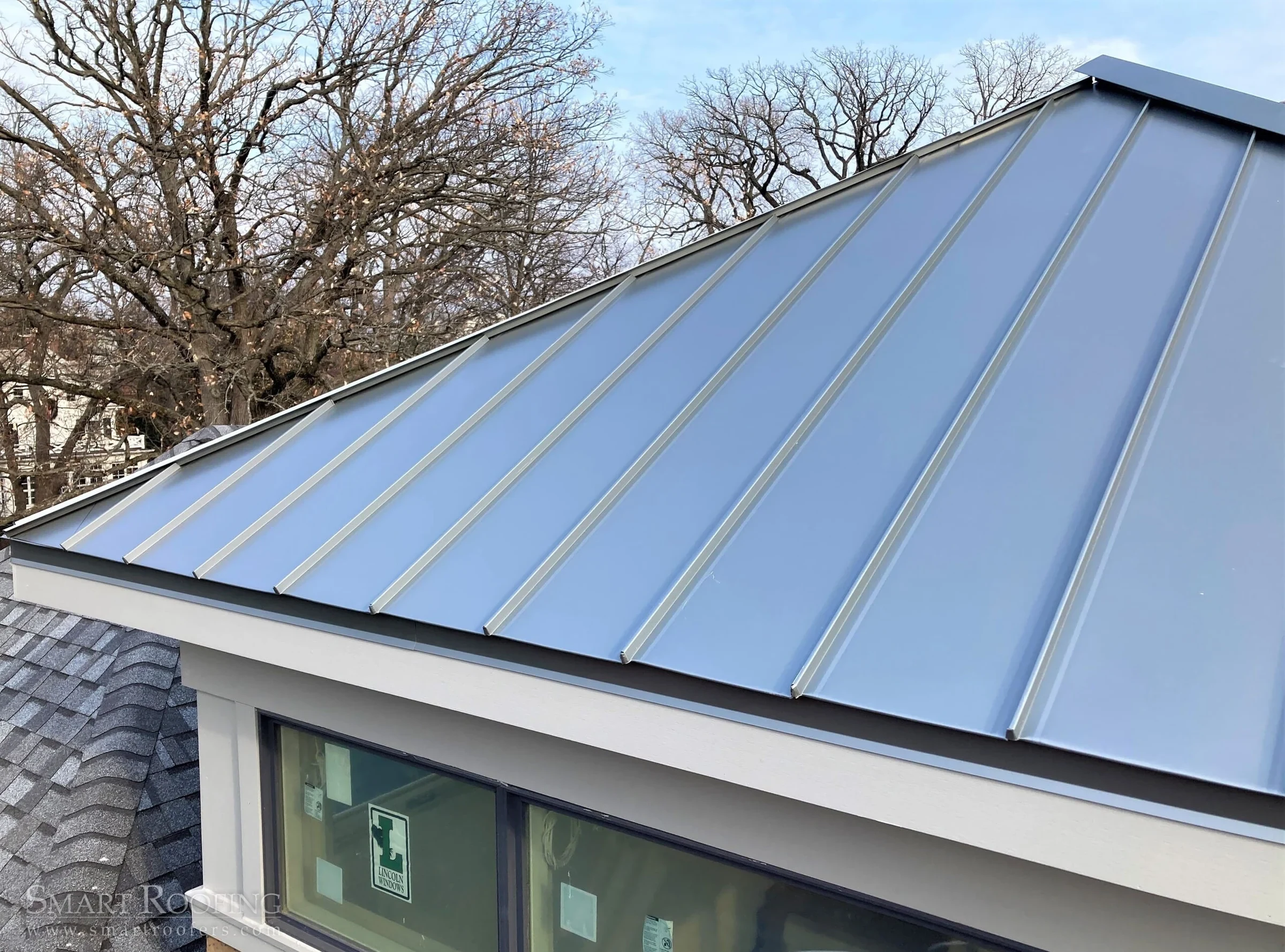
TPO and EPDM cover most of the low-slope reroofs we do here, chosen based on the building's insulation needs, budget, and rooftop equipment density rather than one system being universally better. For buildings that need a fully adhered, puncture-resistant membrane around heavy rooftop traffic, PVC comes up more often. For steep or architectural sections, standing seam metal holds up well against wind-driven snow.
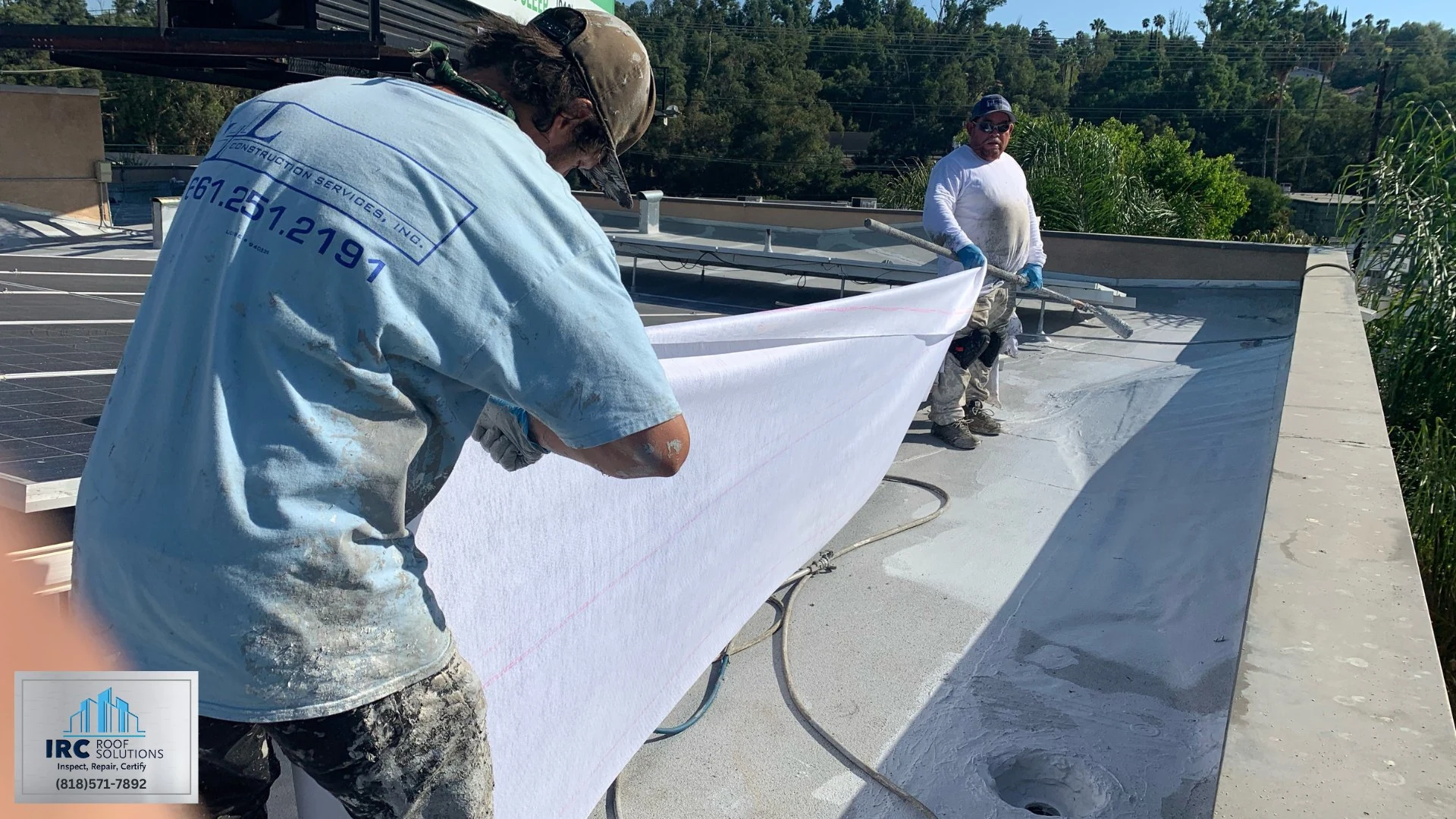
Whatever system goes down, seam welding and flashing detail matter more here than the base membrane choice — most reroof failures we're called back to fix start at a seam, a penetration, or a parapet edge, not in the middle of the field membrane. See our edge metal and coping page for how we handle that boundary work.
Reroofing Questions We Hear From Erie Building Owners
How long does a typical commercial reroof take in Erie?
Timeline depends on roof size and how much of the deck needs replacement, but most projects run from a few days for a straightforward recover to several weeks for a full tear-off with significant deck repair. Weather windows in fall and winter can extend that timeline, which is part of why we plan the schedule around Erie's storm patterns instead of a generic calendar.
Can we reroof without shutting down our building?
In most cases, yes. We section the roof and manage dry-in at the end of every work day so the interior stays protected. Buildings with sensitive equipment or continuous production get a more conservative staging plan.
Do you replace insulation during every reroof?
Only where it's wet, crushed, or below current code minimums. We test insulation condition before writing the scope so owners aren't paying to replace insulation that's still performing.
How do you handle a roof with multiple membrane layers already on it?
We check local code limits on layer count and the moisture condition of what's already there. If code or moisture conditions require it, we strip to deck rather than adding a third layer.
What's the biggest mistake owners make with reroof timing?
Waiting until a leak forces the decision. A reroof planned during a dry stretch in late spring or summer goes faster and costs less than emergency work squeezed in during a lake-effect snow event.
Ready to review the roof scope?