-
Snow & Ice Roof Damage Insurance Claims in Erie, PA
Turning Erie's Lake-Effect Snow and Ice Damage Into a Documented Claim
Erie sits in one of the heaviest lake-effect snowbelts in the country, and a snow or ice event that would be unremarkable in most cities can put real weight and real water where a low-slope commercial roof isn't built to take it. When that happens, the claim usually comes down to timing and documentation — how fast the damage was recorded and how clearly it's tied to the specific event, not to a membrane that was already tired going into winter.
Why Snow and Ice Claims Move Differently in Erie
Lake-effect bands can drop several feet of snow on one part of the city while a building a few miles away stays nearly clear, so two owners on the same claim adjuster's desk can be describing very different storms. Add drift loading against parapets and rooftop units, and the accumulation an adjuster needs documented is rarely uniform across the roof. We measure depth at multiple zones rather than one spot, because a single average number understates what's actually sitting against a curb or wall.
Filing a Claim Before the Evidence Melts
Snow and ice damage evidence has a short shelf life compared to wind or hail. Meltwater moves, refreezes, and reshapes what an adjuster would have seen the day after the event. Where it's safe to access the roof, we document accumulation depth, drift patterns, and any visible membrane stress or ponding before conditions change, and we keep dated photos as the reference for whatever timeline the claim ends up needing.
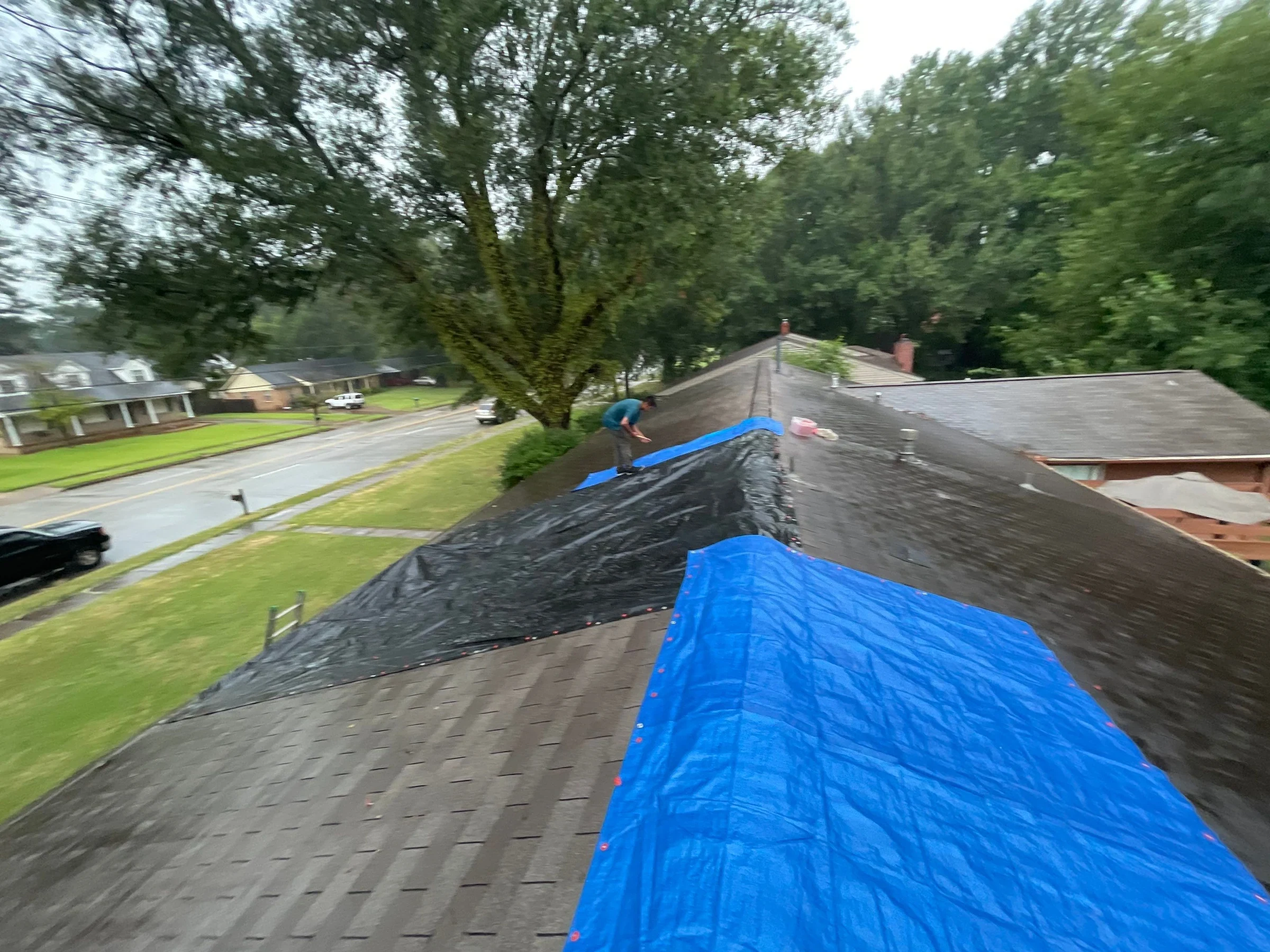
Where an ice dam has already caused a leak, our emergency tarp and dry-in crews stop the water first, but we photograph the ice and any membrane damage before disturbing it so the record still shows what the adjuster would have found. Interior signs of water intrusion get logged too, wherever the space is accessible, since ceiling stains and their timing relative to the storm often support the roof-level documentation in a way an adjuster finds useful.
Separating Storm Damage From an Aging Membrane
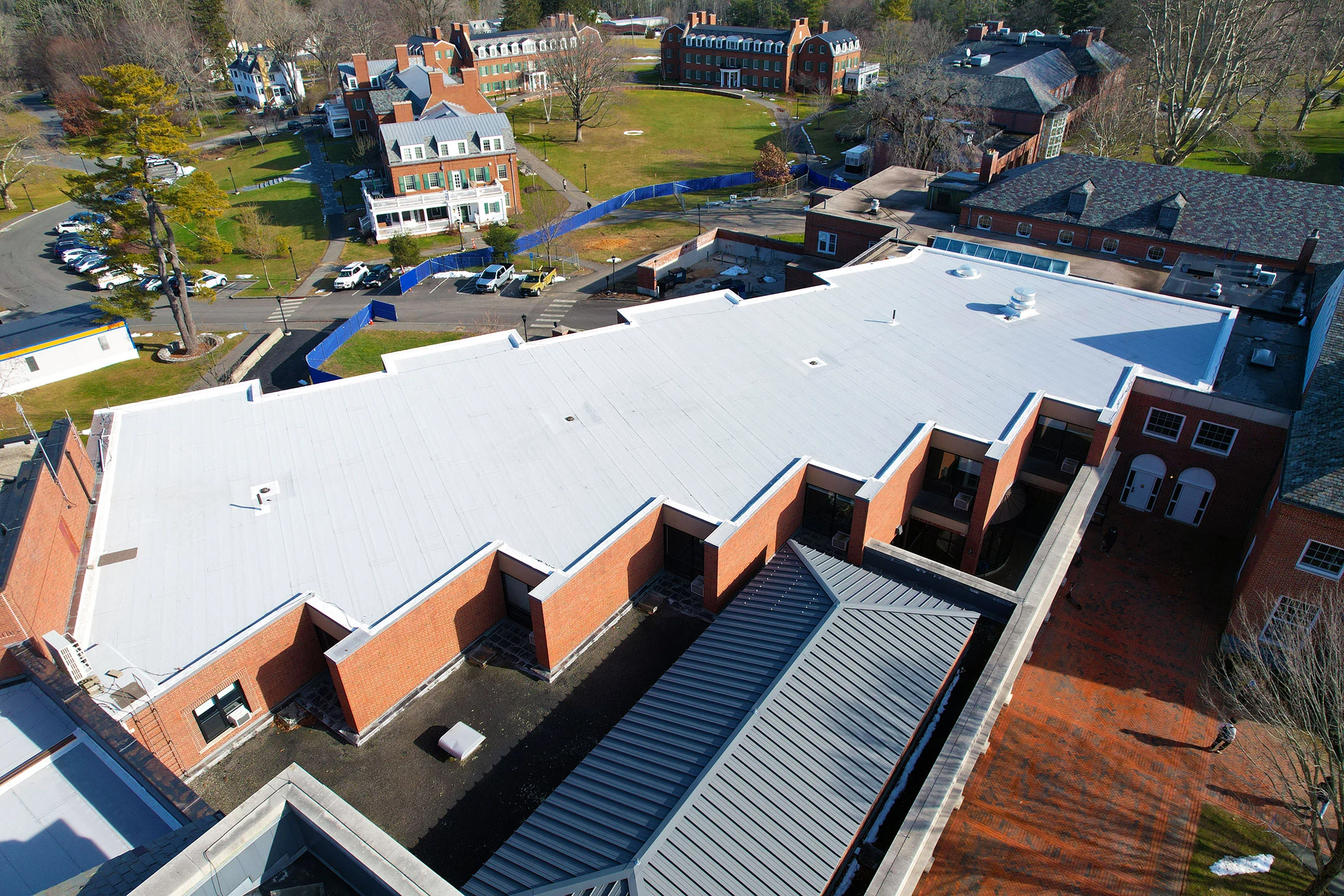
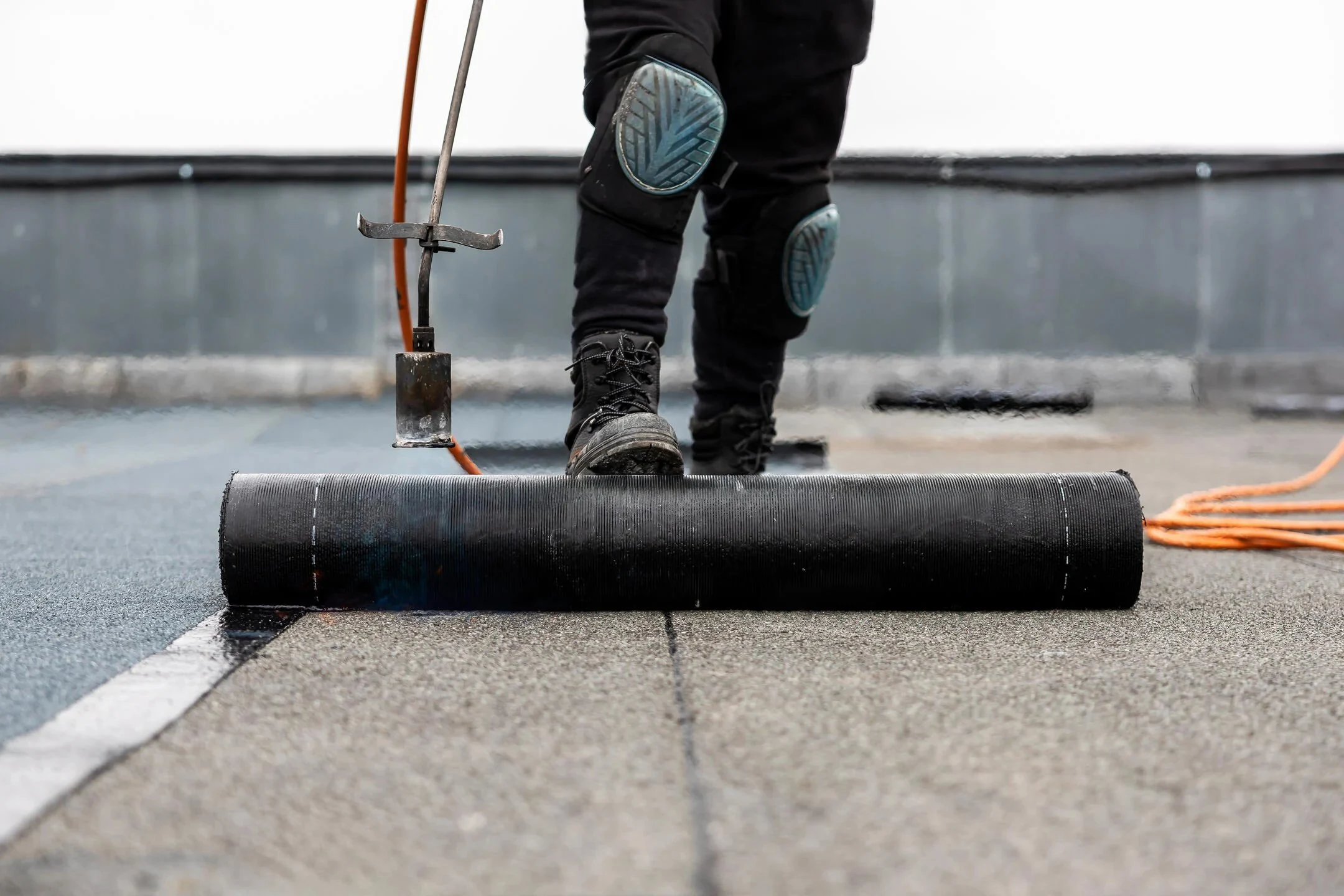
This is where a lot of Erie claims get contested. Older built-up and modified bitumen roofs common on the city's downtown and bayfront industrial buildings tend to get brittle with age, and a brittle membrane can crack under an ice load in a way that looks similar to storm damage but isn't caused by the storm. We note pre-existing wear separately from the current event in every report, because a claim built on that honesty holds up better under review than one that blurs the line.
What a Complete Snow and Ice Claim File Includes
- Timestamped photos of snow depth and ice location before any removal or repair
- Measurements taken across multiple roof zones, including drift areas at parapets and curbs
- Photos of drains and scuppers showing ice blockage or backup, where present
- A written log of emergency mitigation, including when tarping or dry-in started
- A repair or replacement scope tied to the documented damage, including code-required upgrades
Portfolio Owners With Buildings Across Erie County
Lake-effect bands don't hit every part of the county the same way in the same storm. An owner with buildings in downtown Erie, Millcreek, and further out toward Girard or North East can end up with three different snow totals from the same weather system, and three different claim timelines as a result. We keep documentation formatted consistently across a portfolio so a multi-building claim after one storm doesn't turn into a patchwork of report styles, and so year-over-year snow load history stays comparable for an owner who's tracking roof condition across several properties.
When Snow and Ice Claims Get Denied or Cut Short
The most common dispute on a lake-effect claim is a carrier attributing damage to age or lack of maintenance rather than the snow or ice event. When our documentation supports a different read, we put together a written comparison tied to the disputed points, which the owner can take back to their adjuster or public adjuster. We don't estimate what a structural engineer would find on a deflection concern that's beyond a roofing inspection, and we don't tell an owner what the claim is worth — that's the carrier's determination to make.
We're your roofing contractor, not a public adjuster — we document and substantiate the roof damage so you and your adjuster work from an accurate scope.
Snow and Ice Claim Questions Owners Ask
How soon after a snow or ice event should we document the roof?
As soon as it's safe to get on the roof. Drift patterns shift and ice melts, so the clearest record comes from documenting before removal or repair work starts.
Will a heavy snow load claim get denied if the roof is older?
Not automatically, but age can complicate the review. We separate pre-existing wear from the current event in our documentation so the claim isn't weakened by an unclear record.
Do you coordinate snow removal during a claim?
We can coordinate removal, but we document conditions first wherever there's any sign of damage, since clearing snow can remove evidence an adjuster needs.
Can ice dam damage be claimed separately from a general storm claim?
Often, yes, since ice dam damage has its own documented cause and location. We record it as its own item within the broader claim file.
What if we already removed the snow before documenting anything?
We can document current conditions and provide our professional assessment, though the strength of the record depends on what evidence is still available.
Ready to review the roof scope?