-
Metal R-Panel Roofing in Erie, PA
R-Panel Metal for Erie County's Rural Industrial Buildings
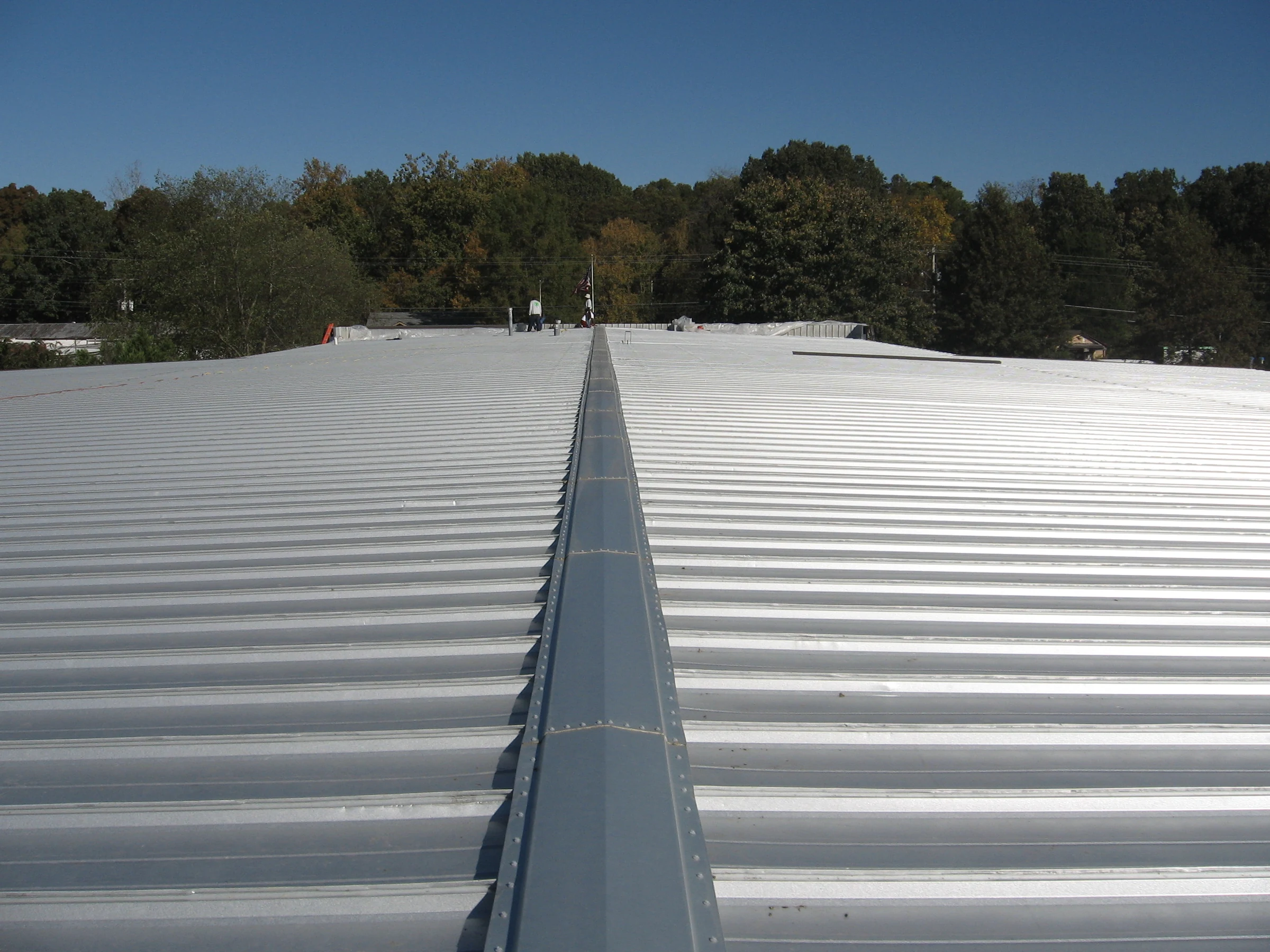
Out past the suburban ring, in boroughs like Girard, Waterford, Wattsburg, and Saegertown, a lot of the industrial and agricultural building stock is covered in exposed-fastener R-panel metal roofing rather than standing seam or membrane systems. It's the workhorse roof for pole barns, machine shops, storage buildings, and small manufacturing structures across rural Erie and Crawford counties, and we install and repair it regularly.
Why R-Panel Fits Rural Industrial Buildings
R-panel is a simpler, more economical system than standing seam, and for a lot of the metal fabrication shops, farm structures, and light-industrial buildings scattered through the rural boroughs, that lower installed cost matters more than the added durability of a concealed-fastener system. Buildings like the ones around Saegertown's industrial plants or the small manufacturing structures near Girard's Route 20 corridor don't need the architectural finish standing seam offers — they need a durable, weathertight roof at a cost that makes sense for the building's use.
Exposed Fasteners and Erie's Freeze-Thaw Cycle
R-panel's defining feature is also its main maintenance concern: exposed fasteners penetrate the panel directly, each one sealed with a washer that degrades over time. Erie's repeated freeze-thaw cycling accelerates that washer breakdown compared to a milder climate, since the panel and fastener expand and contract at slightly different rates through every winter thaw-and-refreeze event. A washer that's lost its seal is a direct path for water into the building, and it's the single most common repair call we get on R-panel roofs.
We re-fasten and re-seal exposed fastener rows as standard maintenance, well before a homeowner or building manager notices an active leak, because catching worn washers early is a fraction of the cost of chasing water damage after the fact.
Snow Load and Fastener Pattern
R-panel roofs on agricultural and light-industrial buildings often cover wide spans with minimal interior support, which puts real weight on the panel and purlin system during a heavy lake-effect winter. Fastener spacing and purlin support have to be sized for the actual snow load these buildings see, not a generic minimum, especially on older structures built before local snow-load requirements reflected the accumulation patterns Erie County actually experiences.
Condensation Under Metal in a Cold Climate
Uninsulated or under-insulated metal roofing over a heated interior space is prone to condensation forming on the underside of the panel during cold weather, as warm interior air meets a metal surface chilled by outside temperatures. That condensation drips onto stored equipment, inventory, or product below, and it's a problem specific to metal panel construction that membrane roofs don't share in the same way.
We address it with proper vapor barrier placement and, where the building use justifies it, an insulated liner panel system that keeps interior humidity from ever reaching the cold underside of the roof panel.
Where R-Panel Covers the Region
- Girard and Route 20's light manufacturing and commerce
- Saegertown's rural industrial plants
- Waterford's Route 19 service and storage buildings
- Wattsburg and the fairgrounds-area structures
- Farm and agricultural buildings across the rural townships
- Union City's remaining furniture-manufacturing structures
Recoating and Extending an Older R-Panel Roof
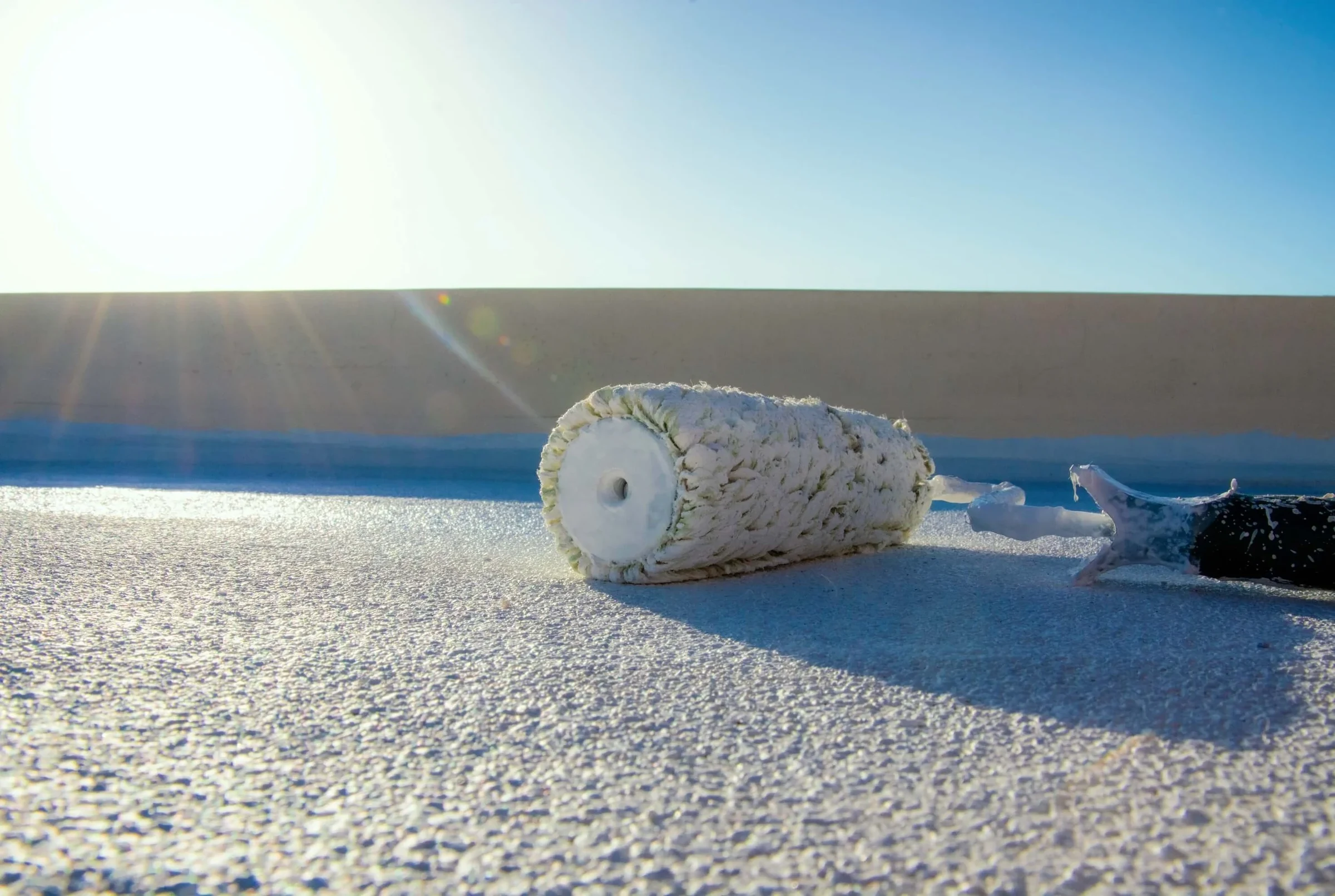
A lot of older R-panel roofs in the rural boroughs are structurally sound but showing surface rust and fading finish after decades of exposure. Rather than a full panel replacement, a specialty metal coating can restore weathertightness and reflectivity to an aging R-panel roof at a fraction of the replacement cost, provided the underlying panel hasn't rusted through.
Sidewall and Trim Details on Pole Barns
A lot of the buildings we service with R-panel roofing are pole-barn or post-frame construction, common on farm and light-industrial sites across the rural townships, and the roof-to-sidewall trim detail on these buildings is a frequent source of leaks that owners mistake for roof panel failure. Gable trim, eave trim, and the transition where roof panel meets sidewall panel all need proper overlap and sealant, and years of thermal movement can work those details loose well before the panels themselves show any wear.
We check trim condition as closely as the panel field on every R-panel inspection, since a leak that looks like it's coming through the roof often turns out to be entering at a trim seam instead.
Common R-Panel Questions
How often do exposed fasteners need to be replaced?
It depends on the roof's age and exposure, but we recommend inspecting fastener condition annually and re-sealing or replacing washers proactively rather than waiting for an active leak.
Can an R-panel roof handle Erie's heaviest lake-effect snow events?
It can, if the fastener pattern and purlin support were sized correctly for the load. We evaluate structural capacity against realistic accumulation before signing off on any R-panel project.
Why is my metal roof dripping water inside during cold weather with no active leak?
That's almost always condensation forming on the panel's underside, not a roof leak. It happens where warm interior air meets an insulated metal surface without adequate vapor barrier protection.
Is R-panel a good choice for a heated workshop or manufacturing space?
Yes, provided condensation control is designed into the assembly from the start. An uninsulated R-panel roof over a heated space without vapor barrier planning is asking for interior moisture problems.
Can an older, rusting R-panel roof be coated instead of replaced?
Often yes, as long as the panel substrate hasn't rusted through structurally. A coating restores weathertightness and appearance at meaningfully lower cost than full replacement.
Ready to review the roof scope?