-
Modified Bitumen Roofing in Erie, PA
Modified Bitumen on Downtown Erie's Older Mixed-Use Buildings
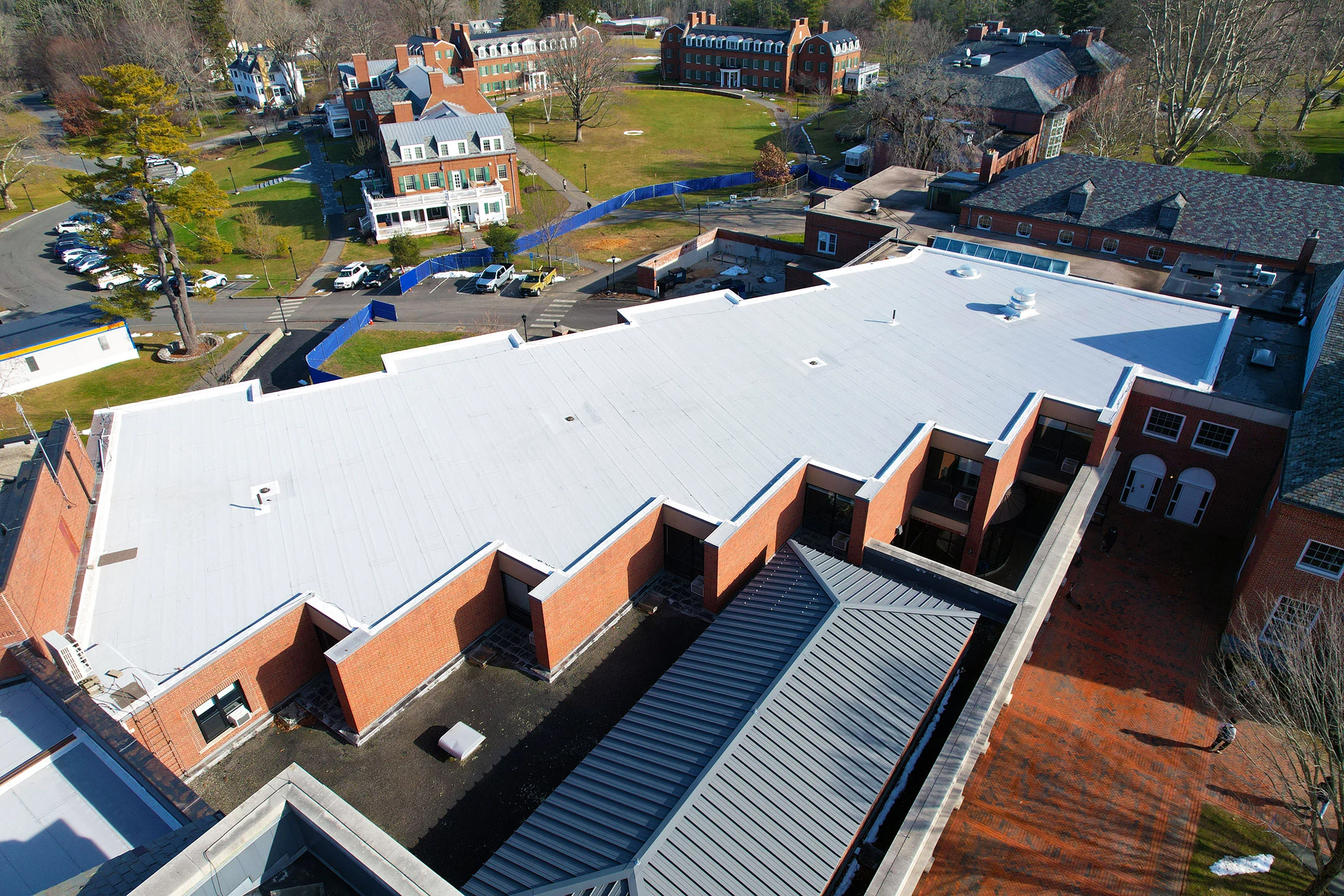
Downtown Erie and the older commercial corridors near State Street carry a lot of building stock that's grown in stages over decades — brick storefronts with additions, mixed-use buildings with retail below and office or apartments above. Modified bitumen still covers a good share of those roofs, and it's a system we install, repair, and coat regularly.
Why Mod-Bit Still Fits Downtown's Building Stock
SBS modified bitumen suits smaller, irregular roof shapes better than a lot of alternatives, which describes plenty of downtown Erie's commercial buildings. Additions tied into older sections, parapet walls at odd angles, and roof areas broken up by adjacent taller buildings all favor a system that can be detailed in smaller sections without relying on massive continuous membrane runs.
The multi-ply, redundant nature of the system also holds up well on buildings where access for full replacement is limited by tight lot lines or shared walls, since mod-bit sections can be repaired and re-capped without pulling the whole roof.
Torch-Applied Versus Self-Adhered Installation
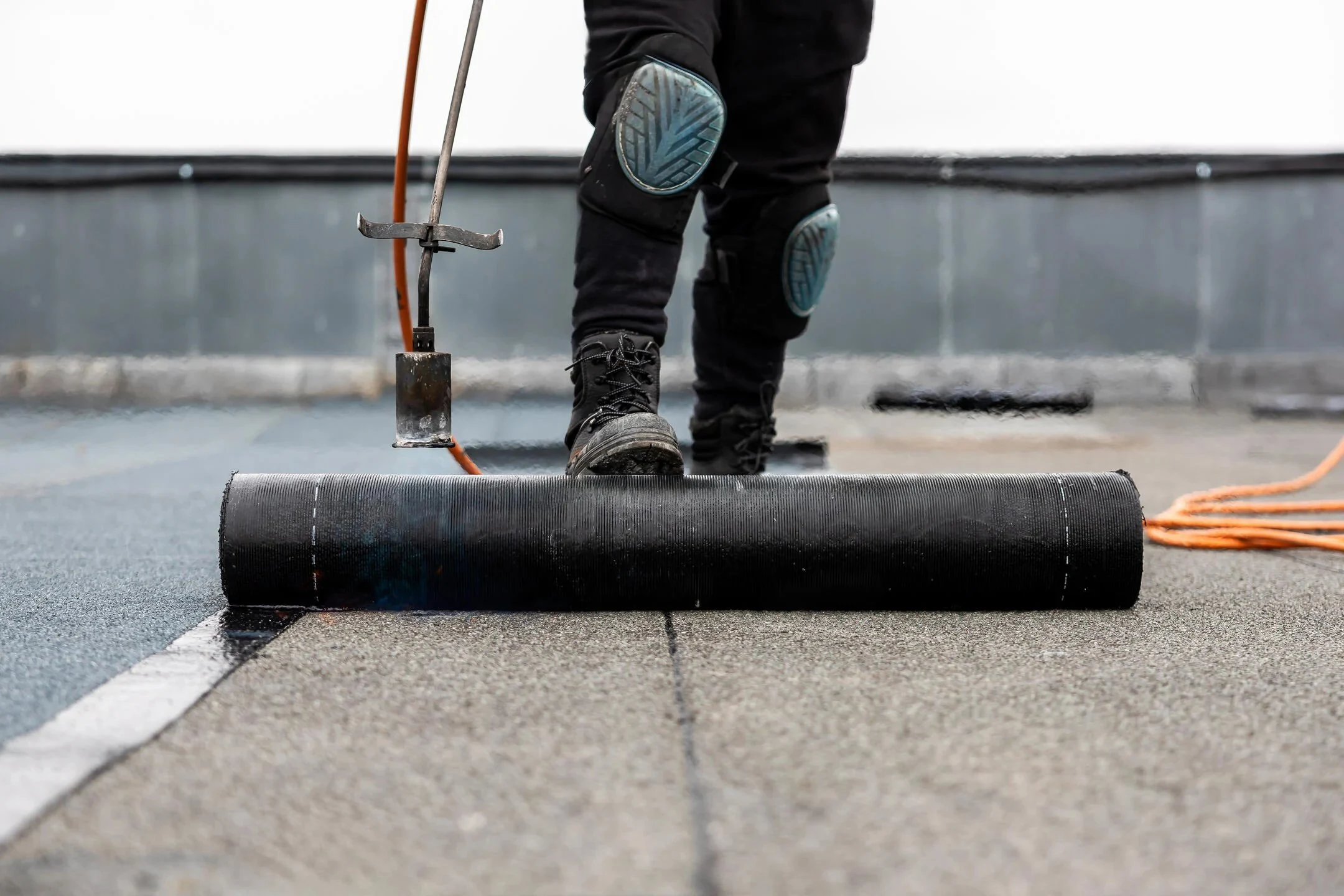
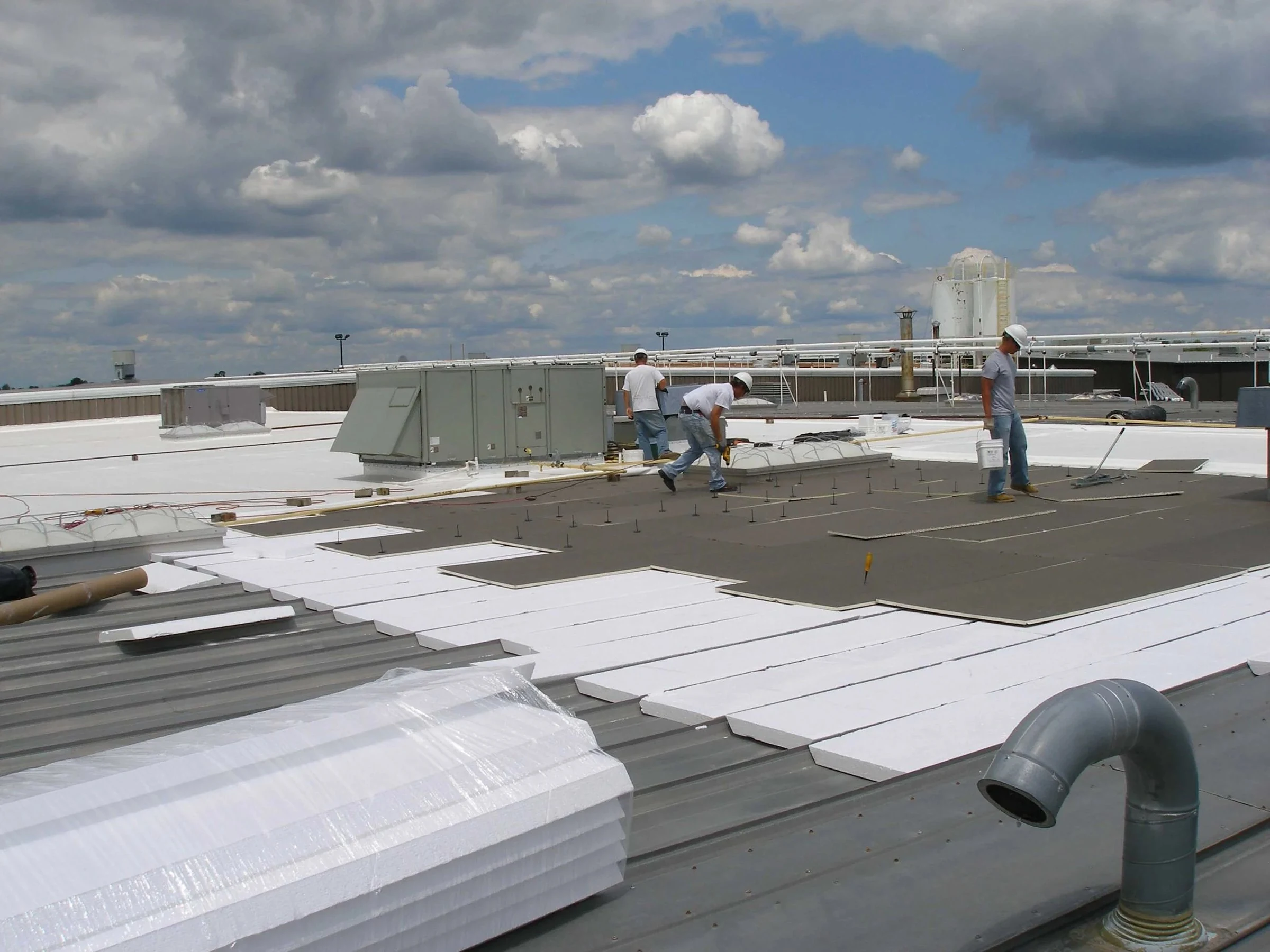
Torch-applying the cap sheet is still a legitimate method on a lot of downtown roofs, but we lean toward self-adhered and cold-applied systems on buildings with wood-frame construction underneath, older electrical runs near the roof deck, or tight clearances to adjacent structures where an open flame adds unnecessary risk. The self-adhered result performs comparably without that exposure.
Ice Damming at Low-Slope Transitions
A lot of downtown's mixed-use buildings have low-slope mod-bit sections that tie into steeper adjacent roofs or parapet transitions, and that's exactly where ice damming forms during Erie's lake-effect winters. Snowmelt from a warmer interior refreezes at the cold edge of a parapet or where a low-slope section meets a taller wall, and ice builds up behind that dam until it starts backing water under the cap sheet.
We detail those transition points with extra attention to flashing and termination bars specifically because they're the first place ice damming shows up as an active leak.
Granule Loss and Winter Wear
The granules on a mod-bit cap sheet protect the asphalt layer beneath from UV exposure, and once granules wear away — from foot traffic, age, or abrasion from ice and snow-removal work — that bare asphalt degrades faster than the surrounding field. Snow-removal crews working a downtown roof with shovels or plastic tools can accelerate granule loss along cleared paths if they're not careful.
We check granule coverage on every mod-bit inspection and note where snow-removal traffic has worn a path, since that's often where the next leak develops.
Base Sheet, Interply, and Cap Sheet Layering
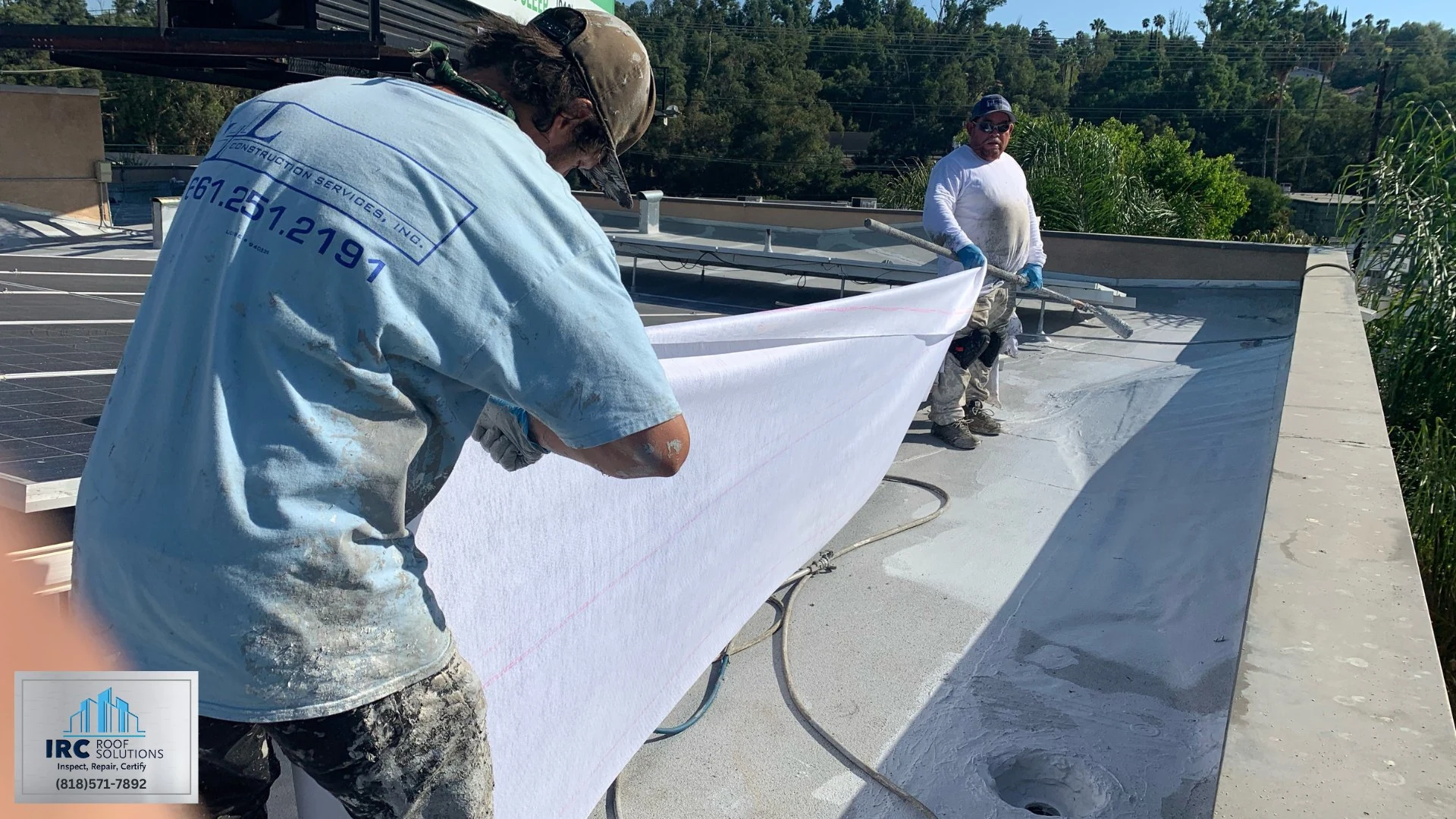
A proper mod-bit system layers a base sheet against the deck, an interply sheet for added thickness in some specs, and a granulated cap sheet that takes direct weather exposure. That redundancy is the whole advantage of the system: a breach in the cap sheet doesn't necessarily mean the deck is exposed, since the layers underneath are still doing their job while we make the repair.
Where Mod-Bit Shows Up
- Downtown Erie's mixed-use retail and office buildings
- Additions tied into older built-up or mod-bit sections
- Small commercial strips along State Street and West 12th Street
- Older apartment buildings with flat roof sections
- Municipal buildings with legacy roof systems
Tying Mod-Bit Into Adjacent Membrane Sections
Plenty of downtown buildings have a mix of roof ages and materials from different renovation phases — an original mod-bit section next to a newer TPO addition, for instance. Those transitions are where mismatched chemistries meet, and that's the most common spot for a tie-in leak to start. We detail those seams with proper termination bar and compatible flashing rather than lapping one material over another and hoping it holds through a winter of freeze-thaw movement.
Parapet Height and Wind-Driven Snow
Downtown Erie's older buildings often have taller parapet walls than modern construction, a holdover from architectural styles decades old, and those tall parapets create their own snow behavior. Wind off the lake pushes loose snow into the corner where a mod-bit field meets a parapet wall, building drift depths well beyond what falls on the open roof. That drift sits against the base flashing all winter, and it's under near-constant moisture pressure from repeated melt and refreeze at the membrane-to-wall transition.
We inspect base flashing at every parapet corner on a mod-bit roof specifically because of that drift pattern, since it's a more demanding condition than the flashing sees anywhere else on the field.
Common Modified Bitumen Questions
Is modified bitumen a good fit for a small downtown storefront roof?
Often, yes. Mod-bit's redundant, multi-ply design and its ability to be detailed in smaller, irregular sections make it a strong fit for downtown's older, compact roof shapes.
Can you recoat a mod-bit cap sheet instead of a full tear-off?
If the cap sheet is intact with granule loss but no widespread blistering or wet insulation beneath, a reflective coating can extend the roof's life at a fraction of replacement cost.
Why does ice damming happen at parapet transitions specifically?
Interior heat escapes unevenly near walls and transitions, melting snow that then refreezes at the colder edge. That refreeze cycle builds an ice dam that backs water up behind it.
Does snow-removal work damage a mod-bit roof?
It can, if crews use metal tools or drag equipment across the cap sheet. We recommend plastic shovels and clear communication with snow-removal contractors about safe clearance depth above the membrane.
How long does a well-maintained mod-bit roof last in this climate?
With granule coverage intact and no chronic ponding or ice-dam leaks, a properly installed mod-bit system holds up for a long multi-decade service life here.
Ready to review the roof scope?