-
TPO 60-Mil Roofing in Erie, PA
60-Mil TPO on Erie Commercial Roofs
Sixty-mil TPO is the baseline thickness we spec for most flat commercial roofs around Erie, from steel-deck manufacturing bays to office buildings downtown. It has to do two jobs that pull against each other here: stay reflective enough to cut summer cooling load, and stay tough enough to take on lake-effect snow, ice, and wind off the water without failing at the seams.
Why 60 Mil Is the Working Baseline
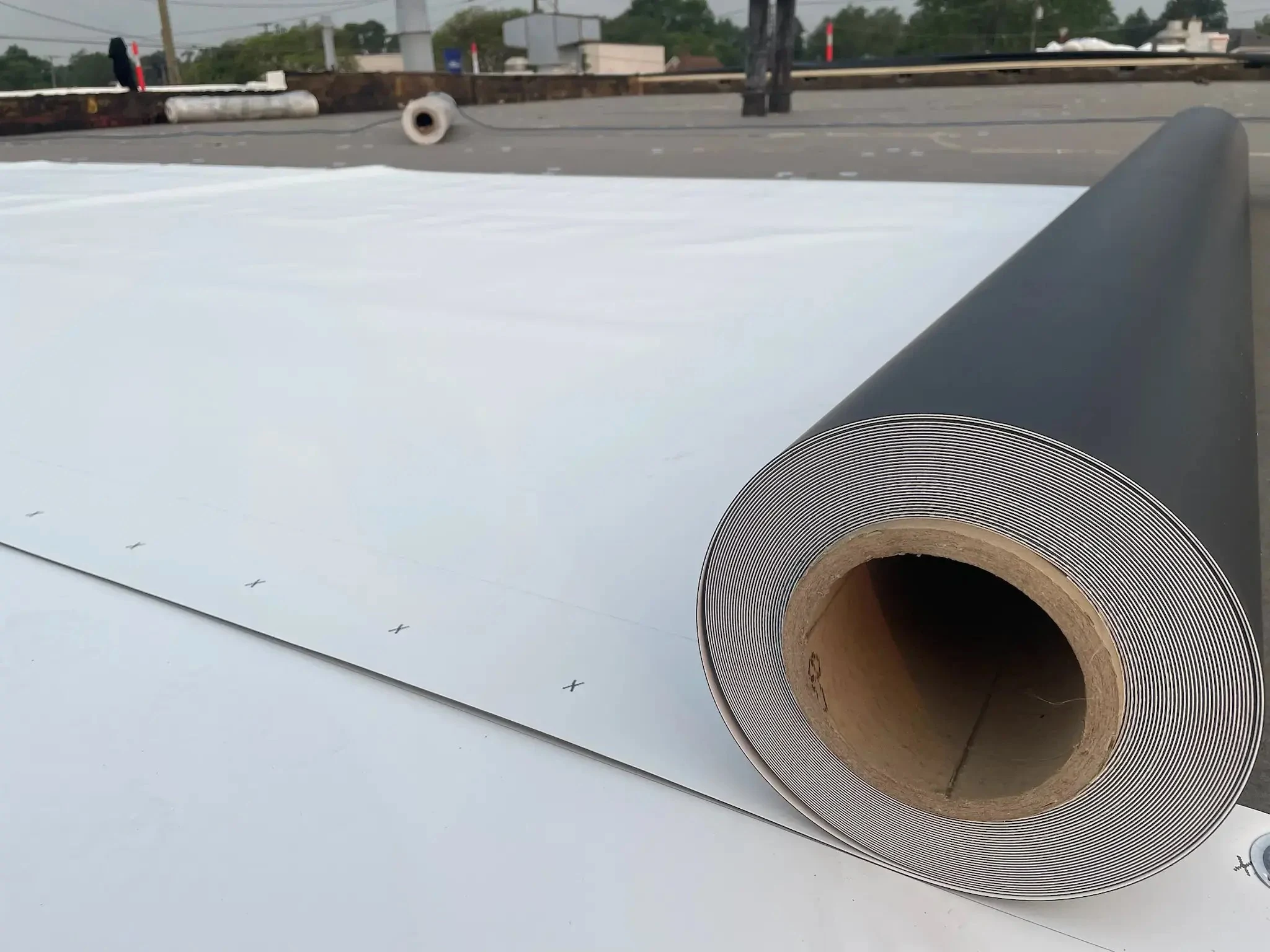
TPO sheet comes in a few thicknesses, usually 45, 60, and 80 mil. Forty-five mil saves on material cost but thins out fast under foot traffic, hail bruising, and the freeze-thaw cycling that Erie roofs go through more times per winter than most of the country. Sixty mil gives enough reinforced scrim and top-ply thickness to resist that wear while staying light enough to install without special crane work on most low-rise buildings.
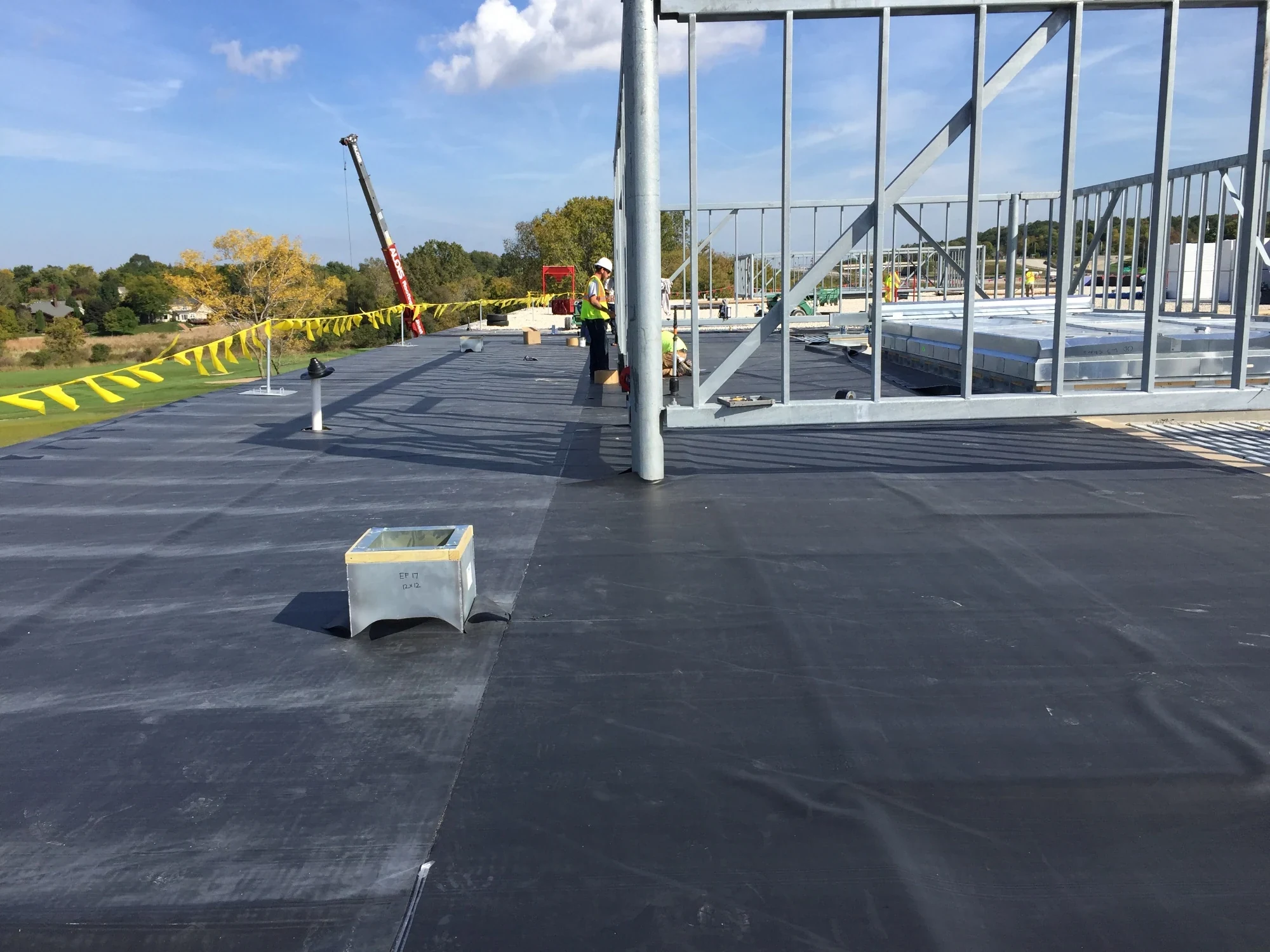
At a facility with the footprint of the Wabtec locomotive complex in Lawrence Park Township, the steel deck spans wide bays with minimal interior support, so the membrane and insulation package carries structural expectations as much as weatherproofing ones. We match attachment method, mechanically fastened, fully adhered, or induction-welded plates, to the deck gauge and the fastener pull-out values an engineer signs off on, not a generic spec sheet.
Seam Welding When the Lake Wind Turns Cold
Hot-air welding needs the membrane and the ambient air above a minimum temperature to fuse properly. In Erie that window closes earlier than it does two hours south, because lake-effect bands can drop temperatures and lay down snow as early as October along the bayfront and points east toward Harborcreek. Crews working a fall reroof have to track the forecast against welder settings, not only the calendar.
Every seam gets probed with a rounded tool along its length, and any T-joint where three sheets meet gets a separate patch, because that intersection is where a poorly timed cold weld shows up first as a leak. Cold membrane also gets stiffer and harder to handle without creasing, which is why crews stage rolls indoors or under heat until they are ready to lay them.
Wind Uplift at Parapets Facing the Lake
Buildings with an open exposure toward Lake Erie see higher sustained wind and gust loading at the roof edge than a building tucked behind other structures inland. Perimeter and corner zones get denser fastening patterns under ASCE 7 wind design, and on a north-facing parapet close to the bayfront we treat that zone as the first place uplift will start a membrane failure.
Ballasted TPO assemblies exist, but we rarely spec them here, because loose stone ballast adds dead load on top of an already-heavy snow load and can migrate during high wind events. Mechanically attached and fully adhered systems give a more predictable uplift number for a roof that already has to carry drifted snow for months at a time.
Snow Load and Drift Behind Rooftop Units
Lake-effect snow does not fall evenly. Narrow convective bands can dump snow over one part of the roof for hours while leaving another section nearly bare, and wind moving across a flat roof piles that snow against parapets, screen walls, and the downwind side of rooftop units. Those drift zones can carry a structural load well above what the open field of the roof sees, which matters on older buildings where the original drawings assumed a lighter, more even load.
- Roof snow load rating from the original structural drawings, where they exist
- Drift-prone zones behind parapets, screen walls, and rooftop unit banks
- Drain and scupper capacity for a fast thaw after a heavy lake-effect event
- Membrane condition in areas where snow gets shoveled or blown clear by hand
- Ice buildup at low-slope transitions, curb flashings, and pipe boots
- Fastener backout at the perimeter after repeated freeze-thaw movement
Where a building has a documented history of drift overload, we will flag it before winter rather than after a ceiling tile lets go, because a membrane repair is a lot cheaper than a purlin repair.
Reflectivity and the Winter Heat-Loss Trade-off
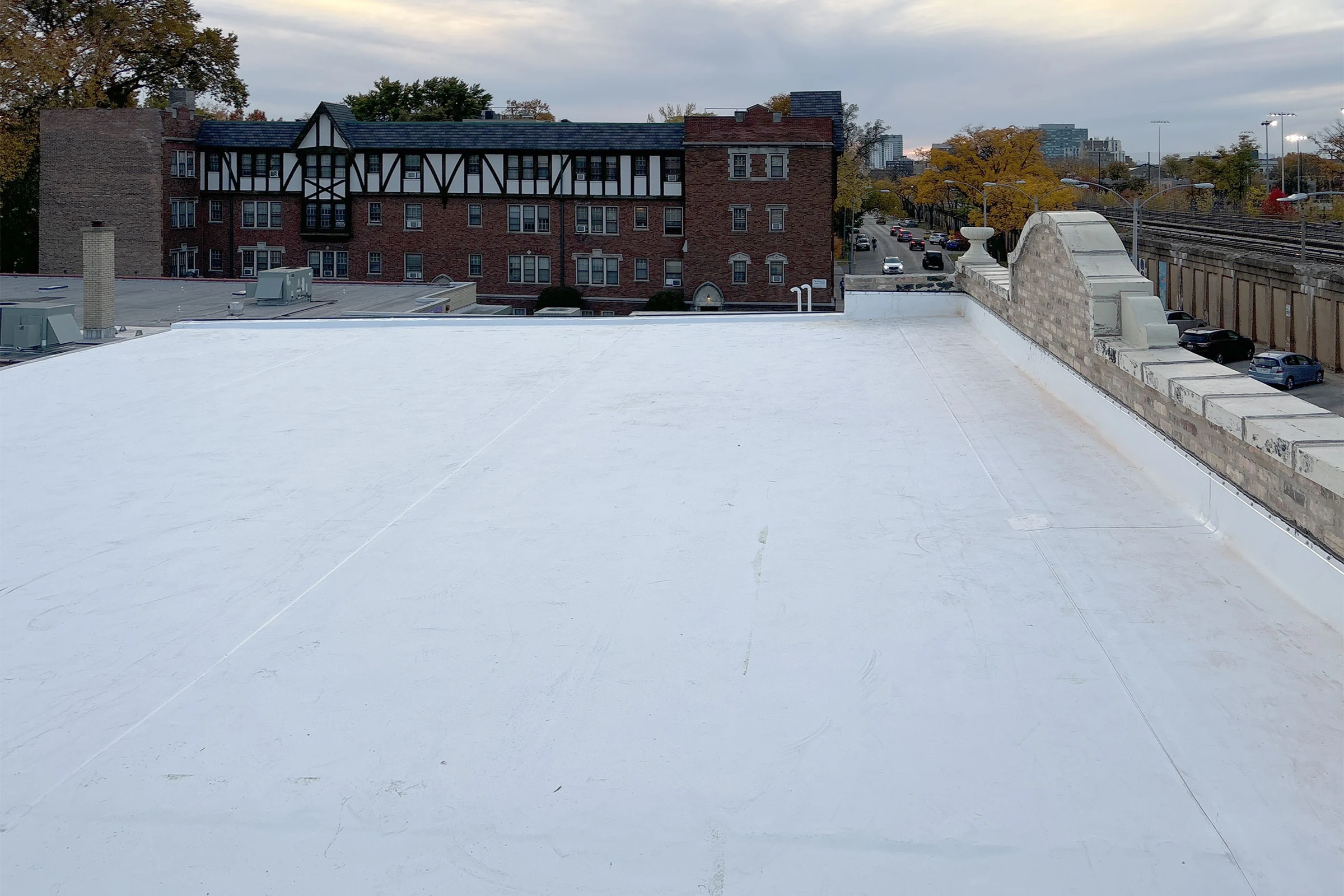
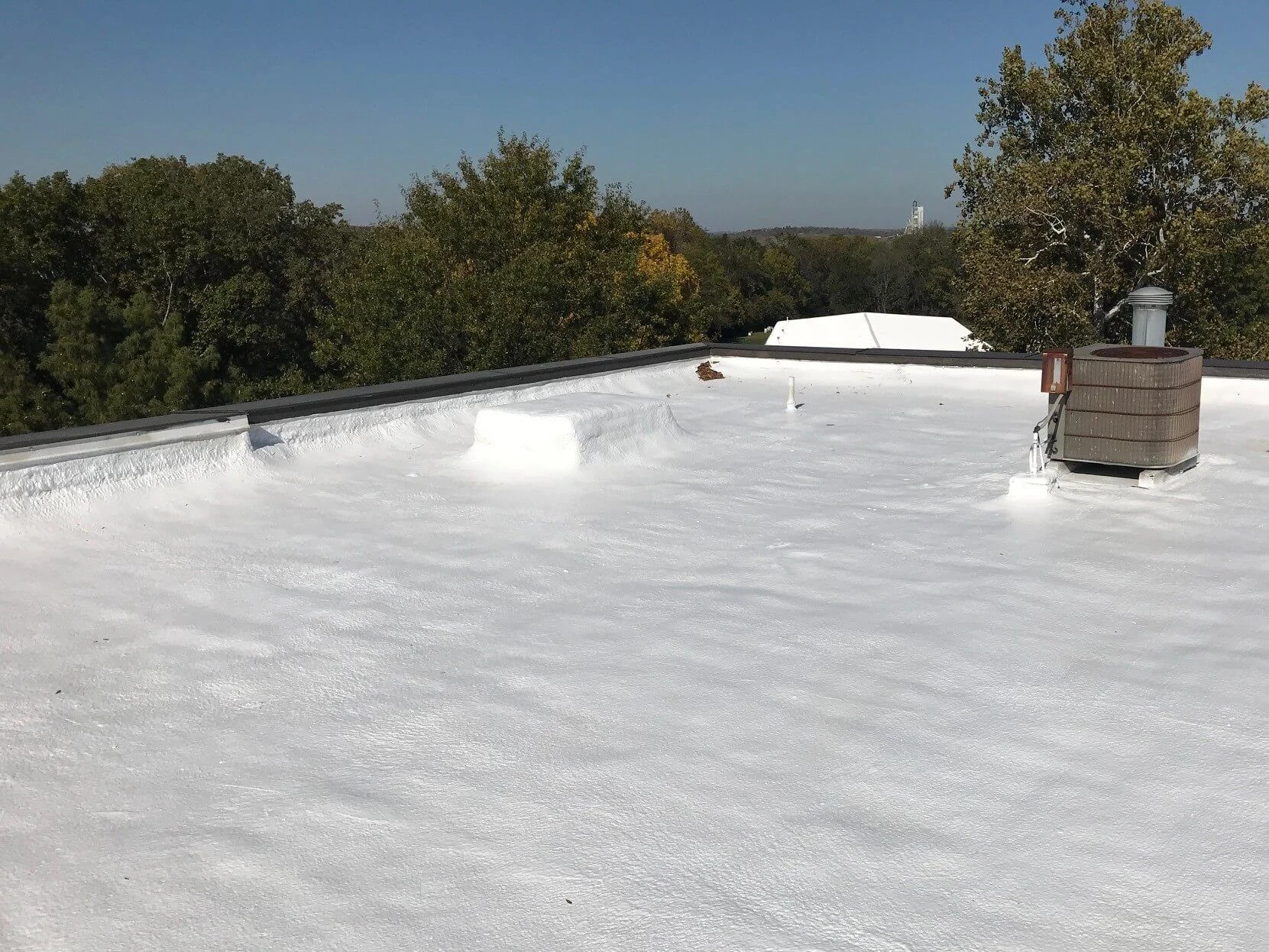
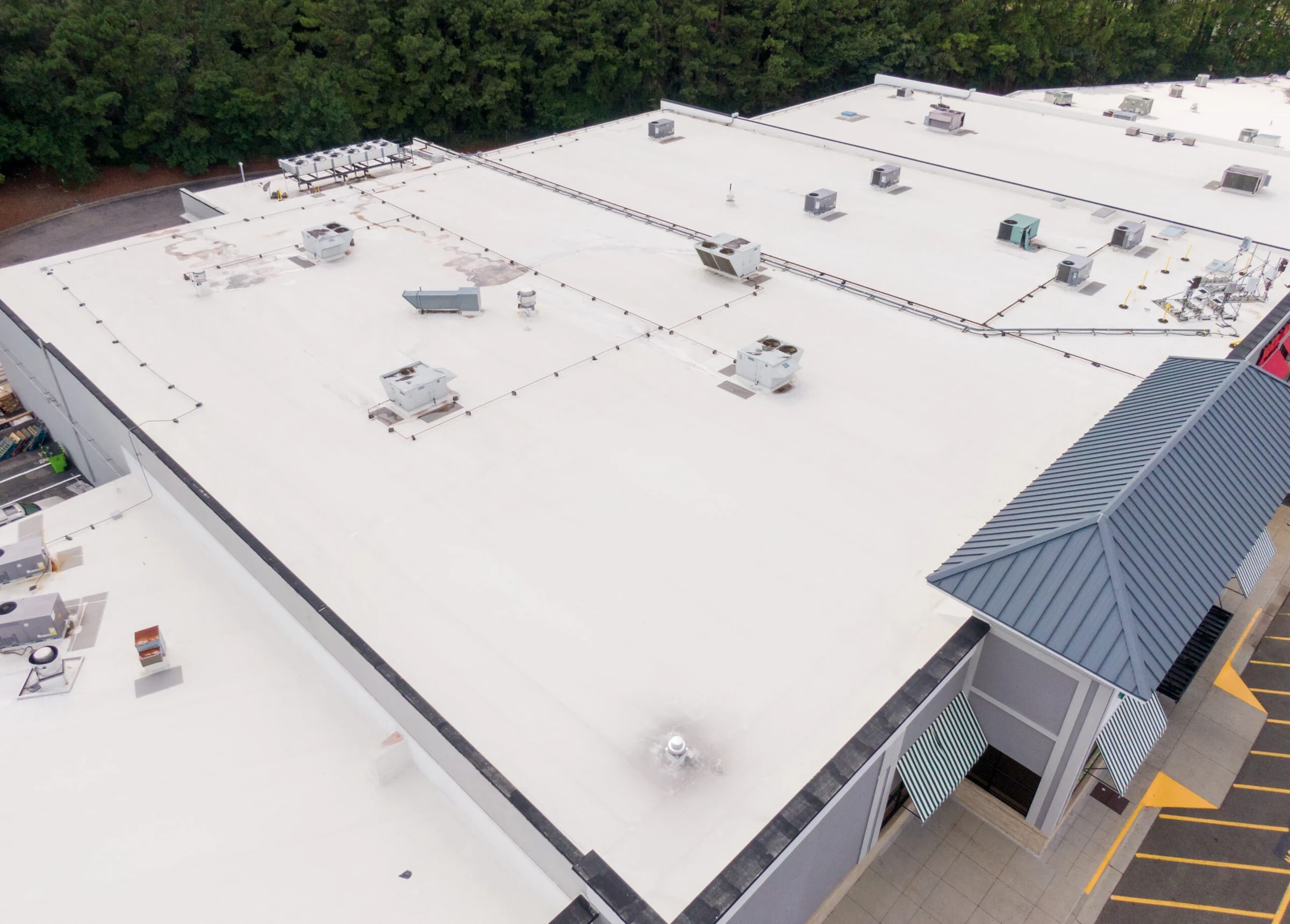
TPO's white top surface reflects a large share of summer solar load, which shows up directly on a cooling bill for a building running rooftop package units through an Erie summer. The same reflectivity works against a roof in December, since a white membrane sheds less solar heat and holds snow cover longer than a dark modified bitumen or black EPDM roof would.
That is why the insulation package under the membrane carries more of the winter performance burden than the membrane color does. Polyisocyanurate loses some of its rated R-value as temperatures drop and if it takes on moisture, so we look at vapor retarder placement and insulation thickness together, not the membrane in isolation, when a building near the bayfront has both summer AC load and long, cold, humid winters to manage on the same roof.
Common Questions on 60-Mil TPO in Erie
Is 60 mil enough, or should a building step up to 80 mil?
For most office, retail, and light-manufacturing roofs, 60 mil holds up well. We look at 80 mil where there is heavy rooftop equipment traffic, frequent ladder access, or a history of foot-traffic damage.
Can TPO be installed in an Erie winter at all?
Welding can continue into cold weather with heated staging and welder adjustments, but once lake-effect snow is falling regularly, we generally push full reroofs to a spring or fall window and handle winter work as targeted repair.
Does snow sitting on the roof all winter damage TPO?
Snow load itself is a structural question more than a membrane one. The bigger membrane risk is repeated ice formation and thaw at seams and penetrations, which is why drainage detailing matters as much as the sheet itself.
How often should seams be checked after installation?
We recommend a walk after the first winter cycle specifically to check seams and flashings that just went through their first freeze-thaw season, then fold that into a regular inspection schedule.
Does a reflective membrane help or hurt in a lake-effect climate?
It helps the summer utility bill and hurts nothing structurally, but it does mean drainage and insulation continuity need more attention since the roof will hold snow cover longer than a darker membrane would.
Ready to review the roof scope?