-
Spray Polyurethane Foam Roofing in Erie, PA
Spray Foam Roofing and Continuous Insulation for Erie's Institutional Buildings
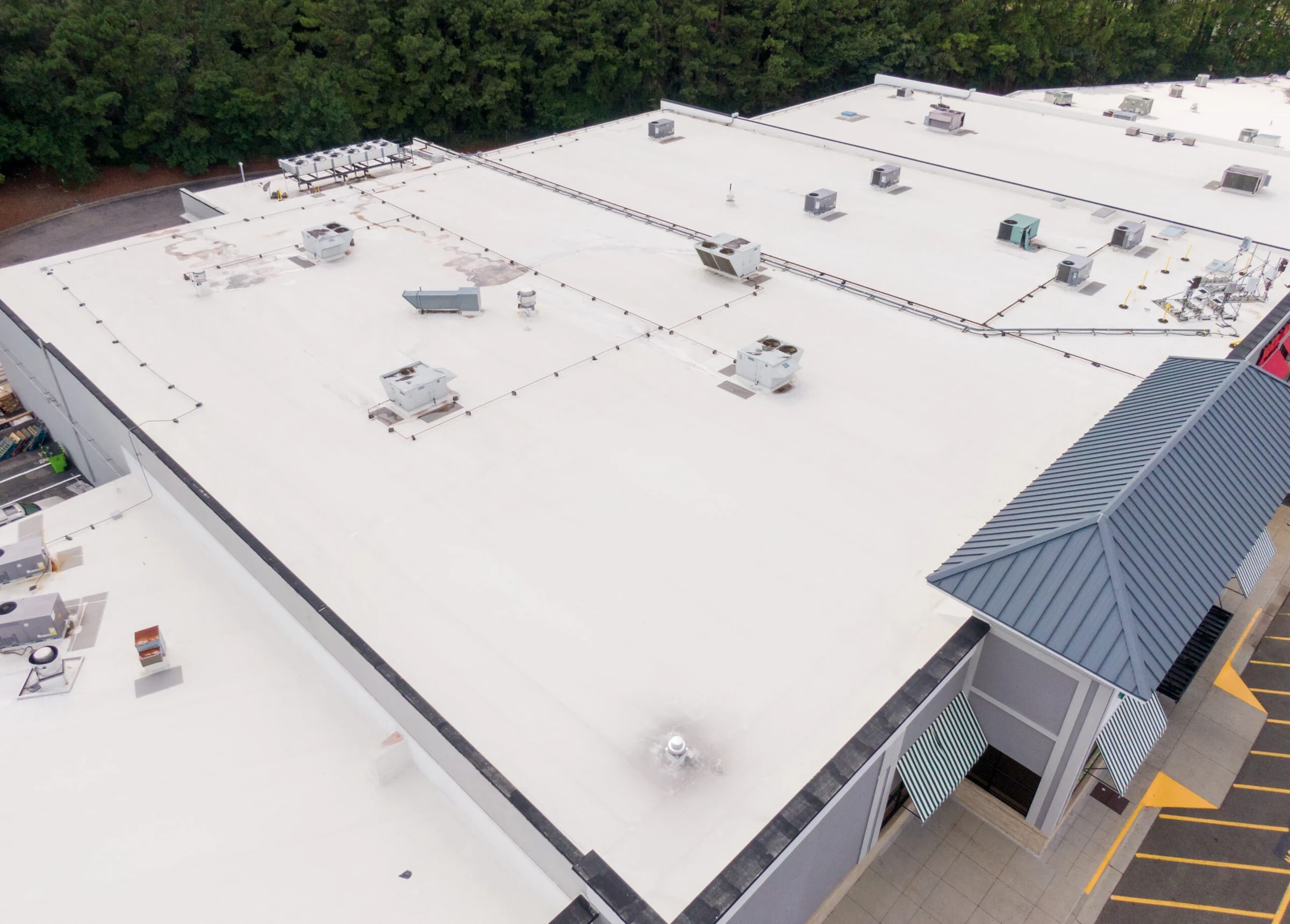
Spray polyurethane foam does two things at once that no other roof system manages as well: it seals and insulates in a single continuous application, and it can be shaped during installation to build slope where a flat roof deck has none. On campus and hospital buildings around Erie, Gannon, Mercyhurst, Penn State Behrend, and the hospital campuses downtown, that combination solves both an energy problem and a drainage problem that would otherwise need separate fixes.
Continuous Insulation Without Thermal Bridging
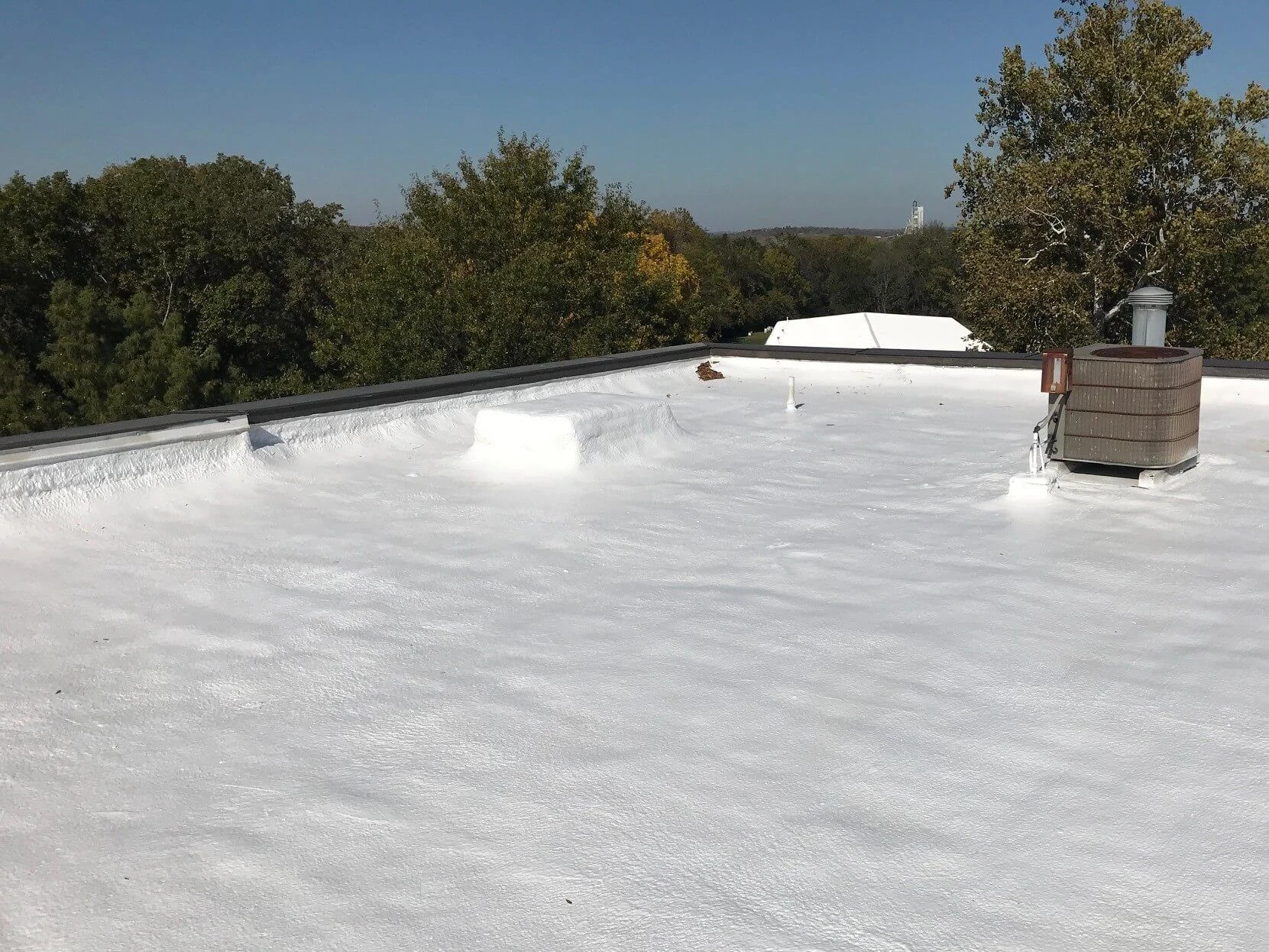
Most roof insulation goes down as boards, and every board joint, every fastener, and every point where a board is cut around a curb or penetration is a small thermal bridge, a spot where heat moves through the assembly faster than the rated R-value suggests. Spray foam eliminates almost all of that, because it's applied as a continuous, expanding liquid that fills gaps and wraps penetrations without seams.
On an institutional building with dozens of roof penetrations, vents, conduit runs, old antenna mounts, mechanical curbs, those thermal bridge points add up to a meaningful heat-loss total across the whole roof. Foam's continuity is where its real energy advantage over board insulation shows up, beyond the R-value per inch printed on a spec sheet.
Building Positive Drainage Into a Flat Deck
Foam is sprayed on as a liquid that expands and cures, which means an experienced applicator can vary the thickness across the roof to create slope where none existed before, directing water toward drains instead of letting it sit in a low spot. On older institutional buildings with a dead-flat deck, original construction rarely accounted for positive drainage the way current design standards would, and foam's ability to build that slope in without structural modification is a genuine advantage over a flat membrane system.
That built-in drainage matters directly for ice-dam prevention. A roof that holds water in a low spot after a lake-effect thaw is a roof where that water can refreeze overnight and grow an ice dam against the next snow event. Directing water positively to drains breaks that cycle before it starts.
Ice-Dam Mechanics on Complex Rooflines
Institutional buildings often have more complex rooflines than a simple warehouse box, wings, setbacks, mechanical penthouses, connecting bridges between buildings, and every one of those transitions is a place where snow and meltwater behave differently than the open field of the roof. Ice dams form where warm areas of a roof melt snow that then refreezes at a colder edge or transition, and foam's ability to be tapered specifically at those transition zones addresses the mechanism directly rather than just protecting against its symptoms.
- Positive slope verification at every drain, especially on additions or connecting sections
- Foam thickness consistency at parapets, curbs, and roof-to-wall transitions
- Protective coating condition, since foam requires a UV-protective topcoat
- Penetration density mapped across mechanical penthouses and equipment areas
- Historic ice-dam locations identified from maintenance records or visible staining
- Recoat interval scheduled to maintain UV protection over the foam substrate
We walk institutional roofs specifically looking for those transition zones before pricing a foam project, since that's where the system earns its cost premium over a flat membrane.
The Protective Coating Foam Depends On
Spray foam itself is not UV-stable and needs a protective coating, usually silicone or acrylic, applied over it to prevent degradation from sun exposure. That coating is not optional or cosmetic; it's a required part of the system, and its condition determines how long the foam underneath keeps performing.
We build the recoat interval into every foam roof maintenance plan from the start, since a foam roof with a neglected topcoat degrades faster than almost any other roof type, while a properly maintained one can outperform most alternatives on both insulation value and drainage correction over its service life.
Where Foam Makes Sense and Where It Doesn't
Foam isn't the right answer for every building. It performs best on roofs with irregular geometry, drainage problems, or significant thermal-bridging issues from an aging insulation package, exactly the conditions common on older institutional and hospital buildings that have been added onto over decades. A simple, well-drained warehouse box with a straightforward membrane replacement doesn't typically need what foam offers, and we say so plainly rather than defaulting every proposal toward the more specialized system.
The decision comes down to whether a building's specific problems, heat loss through an aging insulation layer, chronic ponding from inadequate slope, complex rooflines with recurring ice-dam history, are the ones foam is actually built to solve.
Questions on Spray Foam Roofing
How long does a properly maintained spray foam roof last?
With a consistent recoat schedule protecting the foam substrate, these systems can perform well for decades, though the coating maintenance commitment is real and ongoing.
Can foam be applied over an existing membrane roof?
Often yes, provided the existing membrane and insulation are dry and structurally sound, which we confirm with core cuts before recommending the approach.
Does foam actually stop ice dams, or just reduce them?
Properly tapered foam that redirects water to drains addresses the root mechanism directly, though extreme lake-effect events can still test any drainage system's capacity.
What happens if the protective coating is neglected?
UV exposure degrades unprotected foam relatively quickly, so a neglected topcoat can shorten the system's useful life significantly compared to one on a proper recoat schedule.
Is foam roofing more expensive than a standard membrane replacement?
Initial cost is often higher, but on a building with real drainage or insulation-continuity problems, the combined fix can cost less than solving those issues separately under a membrane system.
Ready to review the roof scope?