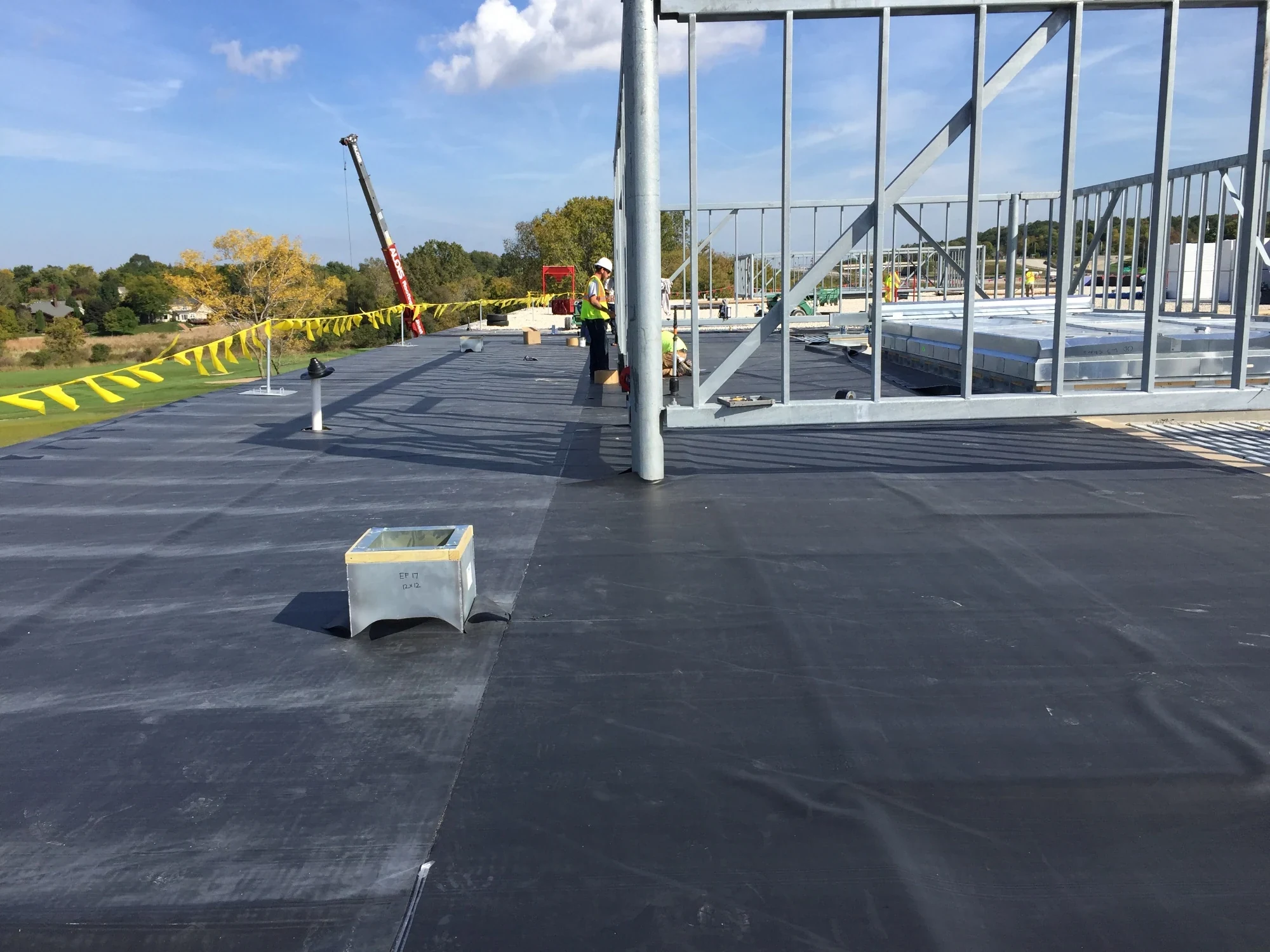
-
TPO 80-Mil Roofing in Erie, PA
Heavy-Gauge 80-Mil TPO for High-Traffic Erie Roofs
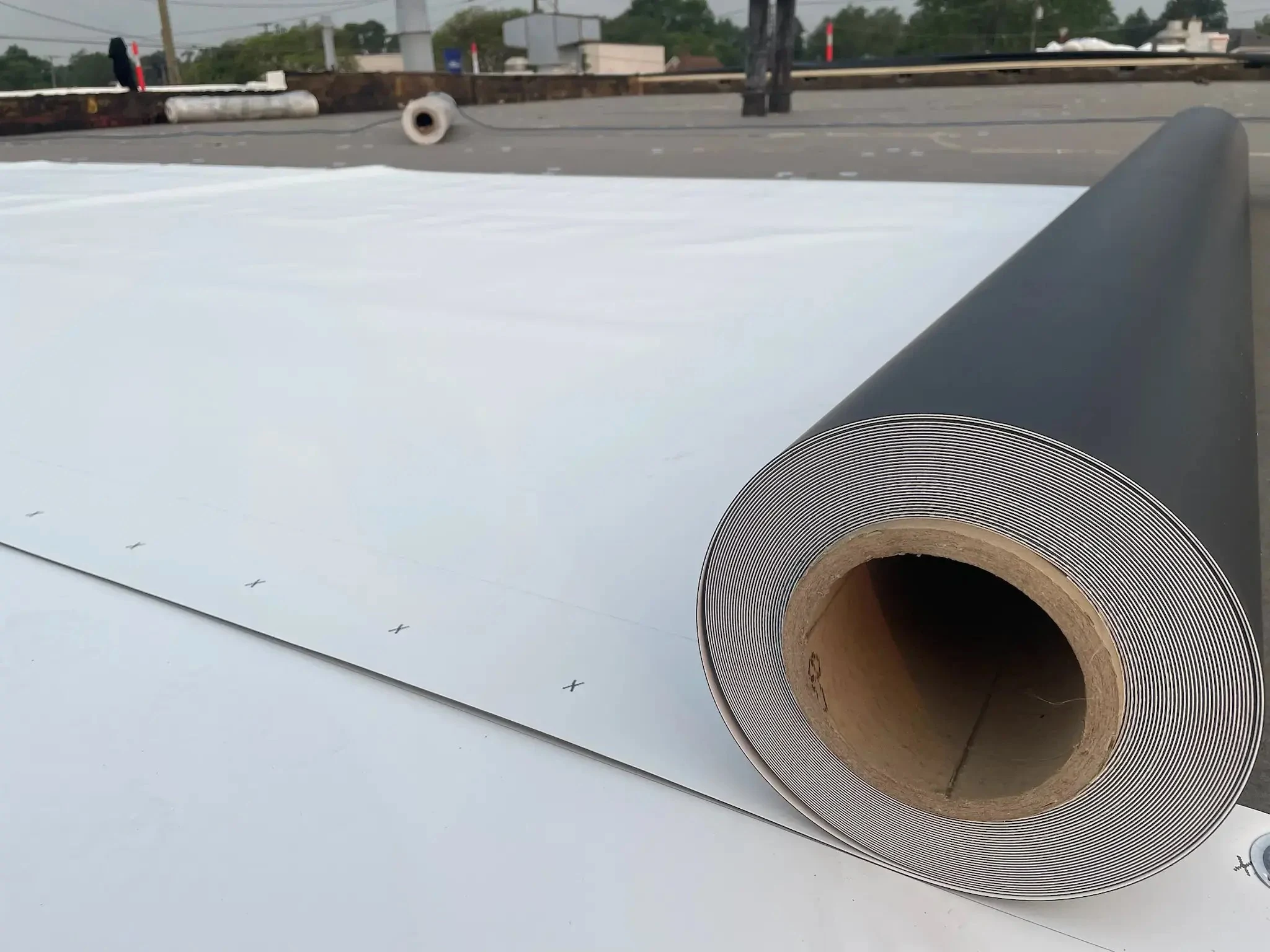
Eighty-mil TPO is the step up we spec when a roof takes more physical abuse than weather alone would justify, service traffic, ladder access, equipment yards, snow-removal work, on top of the same lake-effect winter every roof in Erie already deals with. The extra membrane thickness buys puncture and wear resistance that a 60-mil sheet can't match over the same service life.
Where the Extra Fifty Percent of Material Pays Off
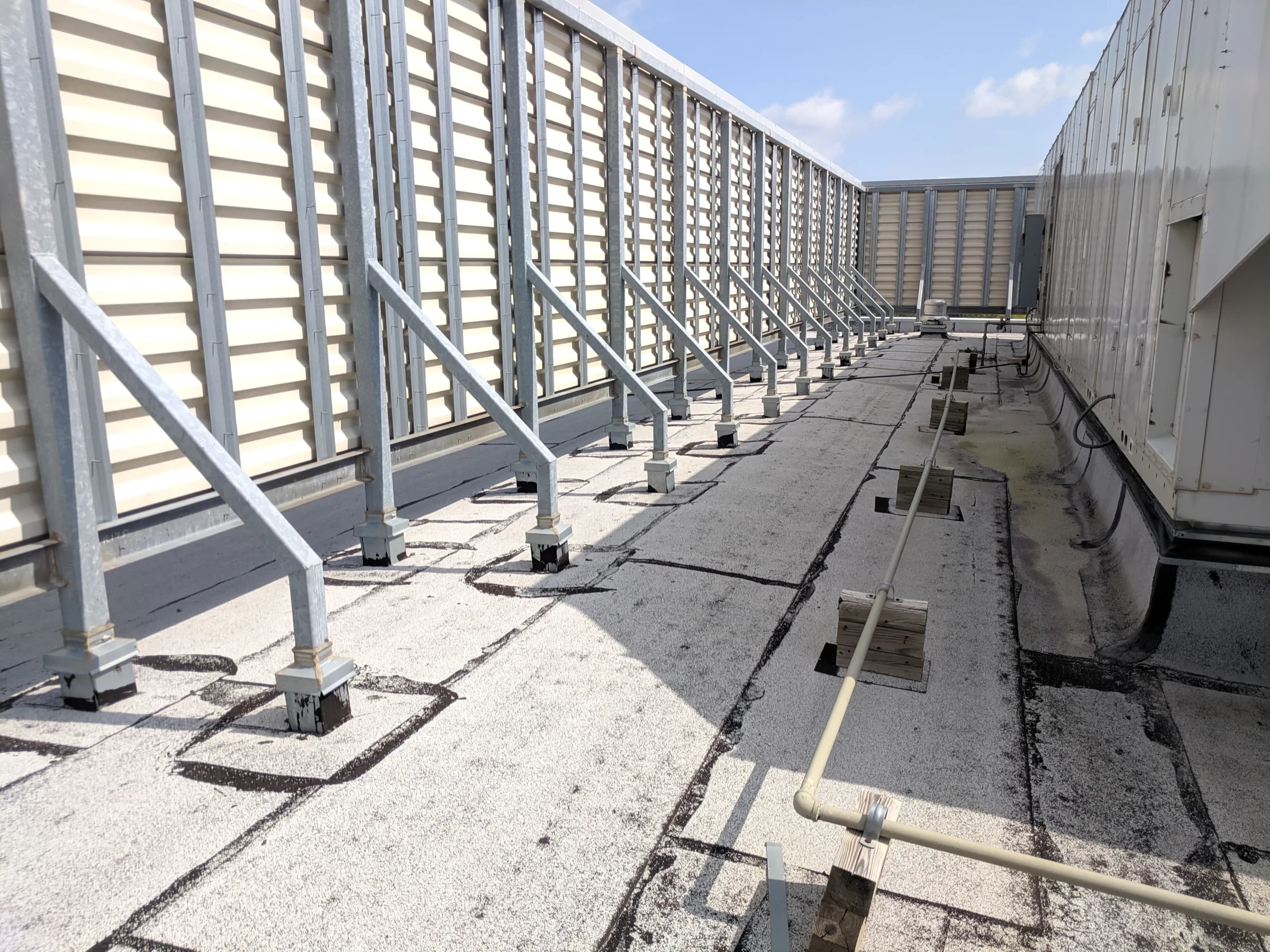
The jump from 60 to 80 mil is roughly a third more polymer and reinforcing scrim per square foot, and that shows up most on roofs that get walked constantly, not merely inspected twice a year. Distribution and light-industrial buildings out along the I-79 corridor in Summit and McKean Townships carry banks of package units, exhaust fans, and conduit runs that technicians access on a near-weekly basis, and 60-mil sheet in those travel paths thins and scuffs faster than the field of the roof around it.
We also lean toward 80 mil on any roof where snow removal is part of the winter maintenance plan. A shovel or a plastic-bladed pusher dragged across a membrane repeatedly, even carefully, is abrasive contact the sheet has to survive for twenty years, not one season.
Puncture Resistance Under Plow and Shovel Traffic
Heavy lake-effect events sometimes push building owners to remove roof snow rather than trust the structure to carry a season's worth of accumulated drift, especially on older buildings with lighter original design loads. That work concentrates foot traffic and blade contact in specific zones, usually near drains and low points where crews are trying to keep water moving during a thaw.
Eighty-mil membrane tolerates that contact better, but detailing still matters: we keep hard plastic or wood shovel guards recommended near any metal edge, drain bowl, or pitch pocket, because it is far cheaper to protect a vulnerable spot than to repair a puncture found weeks later as a stain on a ceiling tile.
Freeze-Thaw Cycling and Long-Term Wear
Erie's winter isn't one long cold snap, it's dozens of freeze-thaw cycles as lake-effect systems move through and temperatures swing back toward the melting point between events. Every one of those cycles works on membrane laps, fastener plates, and flashing transitions a little differently than a steady cold climate would. Heavier sheet resists that cyclical flexing longer before microcracking shows up at stress points.
Rooftop unit curbs and pipe boots take the worst of it, since metal and rubber move at different rates than the membrane around them as temperatures swing. On a heavy-traffic roof we check those transitions on a shorter interval than the general field inspection, because that is where an 80-mil membrane's extra durability gets tested first.
Insulation Continuity Under a Heavier Membrane
Membrane thickness has almost nothing to do with a roof's insulating value, but we bring it up in the same conversation because a heavy-traffic roof often also has more penetrations, more curbs, and more places where insulation gets compressed or cut around equipment supports. Every one of those spots is a thermal bridge that shows up as a warm patch that melts snow faster than the surrounding field, then refreezes at the edge of that patch overnight.
- Curb and equipment-pad insulation continuity around rooftop units
- Compression points where walk pads or dunnage bear directly on insulation
- Pipe boot and conduit penetration density in high-traffic mechanical zones
- Shovel and plow contact zones near drains and roof edges
- Fastener pattern verification in areas rated for foot and equipment traffic
- Flashing transition condition at curbs after each freeze-thaw season
That uneven melt-and-refreeze pattern is a visible sign of a heat-loss problem, and on a heavy-traffic roof it's worth tracing back to the insulation layer rather than assuming it's a membrane issue.
Specifying 80 Mil Without Overbuilding the Budget
We don't default every roof to 80 mil. A low-traffic office roof with a handful of penetrations doesn't need the extra material cost, and that budget is often better spent on drain capacity or insulation thickness instead. The decision comes down to how much physical contact the roof surface takes over its life, not merely its size or its exposure to weather.
When a building's maintenance plan includes regular rooftop access for HVAC service, satellite or antenna work, or manual snow management, the traffic pattern alone usually justifies the heavier sheet, and we lay that reasoning out plainly before pricing rather than upselling thickness as a blanket recommendation.
Questions Owners Ask About 80-Mil TPO
Is 80-mil TPO worth the added cost on every building?
No. It earns its keep on roofs with real foot or equipment traffic. A low-traffic roof is usually better served putting that budget into insulation or drainage improvements instead.
Does thicker membrane mean better wind uplift performance?
Not directly. Uplift resistance comes from the attachment pattern and fastener design more than sheet thickness, though a heavier sheet does resist tearing once uplift starts.
How does snow removal affect membrane warranty coverage?
Manufacturers generally require non-metal tools and specific clearance above the membrane surface for manual snow removal. We review those terms with an owner before winter, not after a claim.
Will 80-mil TPO outlast 60-mil by a fixed number of years?
Service life depends more on installation quality, traffic, and maintenance than on thickness alone, but the heavier sheet gives more margin against the abrasion and puncture risks specific to a high-traffic roof.
Where do heavy-gauge roofs fail first around rooftop equipment?
Curb flashings and pipe boots, almost always, because that's where dissimilar materials move against each other through every freeze-thaw cycle of an Erie winter.
Ready to review the roof scope?