-
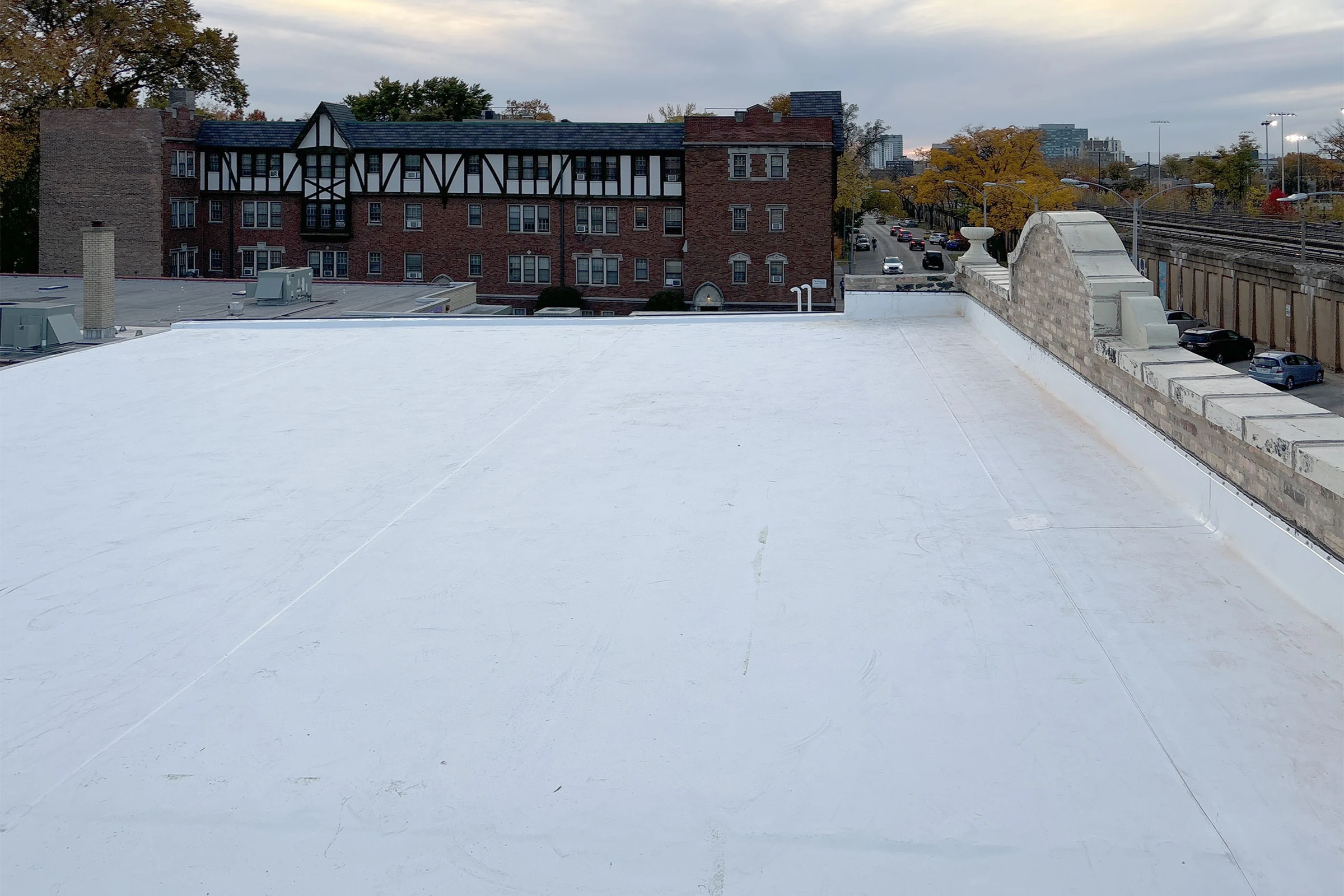
White EPDM Roofing in Erie, PA
White EPDM for Retail and Office Roofs Along Peach Street
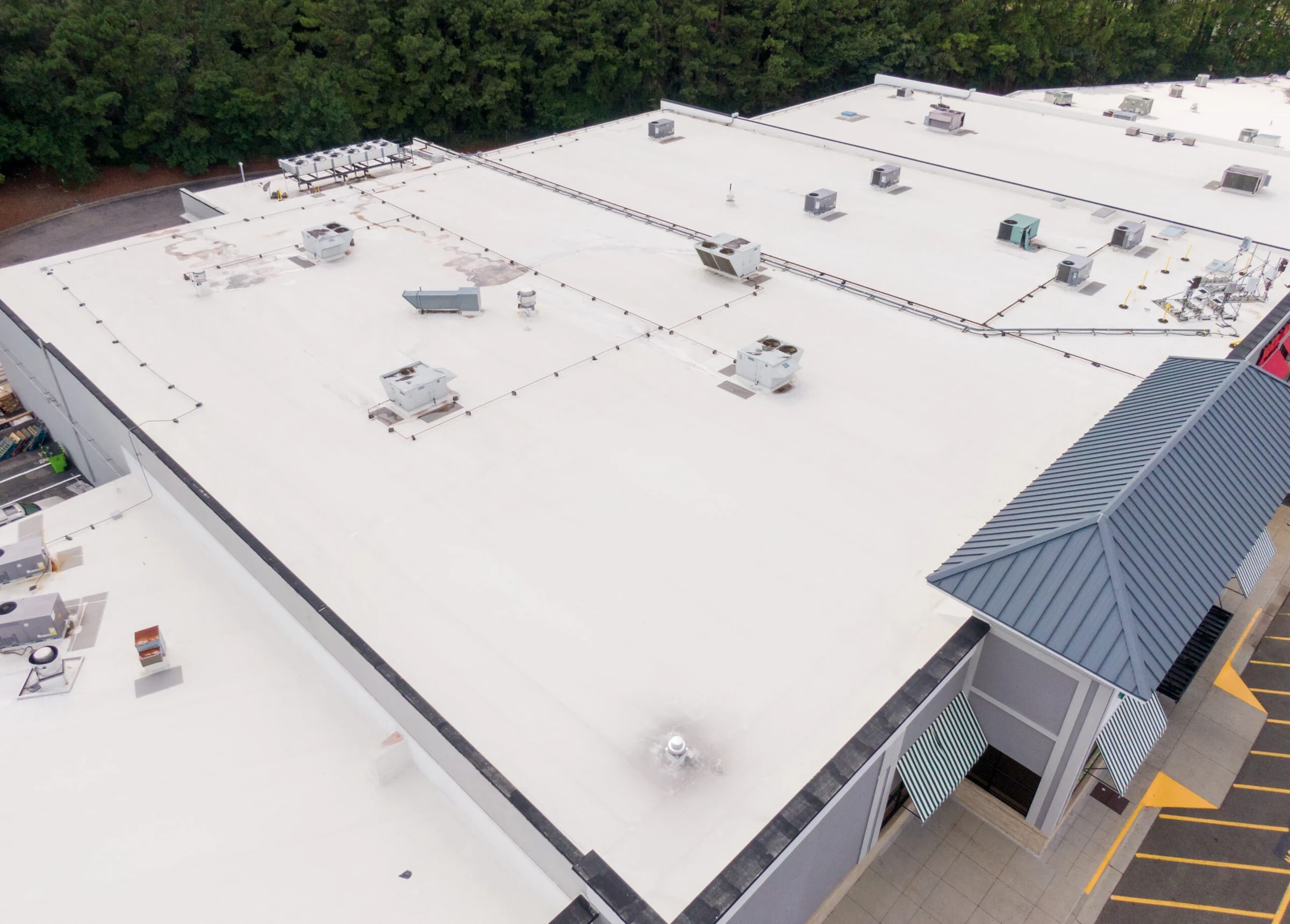
White EPDM gives a building the rubber membrane's flexibility and cold-weather track record without the summer heat penalty of the black version. Along the Peach Street retail corridor and around Millcreek Mall, where big-box and strip retail roofs run rooftop package units almost year-round, that reflectivity translates directly into a lower cooling bill without giving up EPDM's proven seam and flashing behavior in Erie's winters.
A Reflective Cap Sheet on a Familiar Membrane
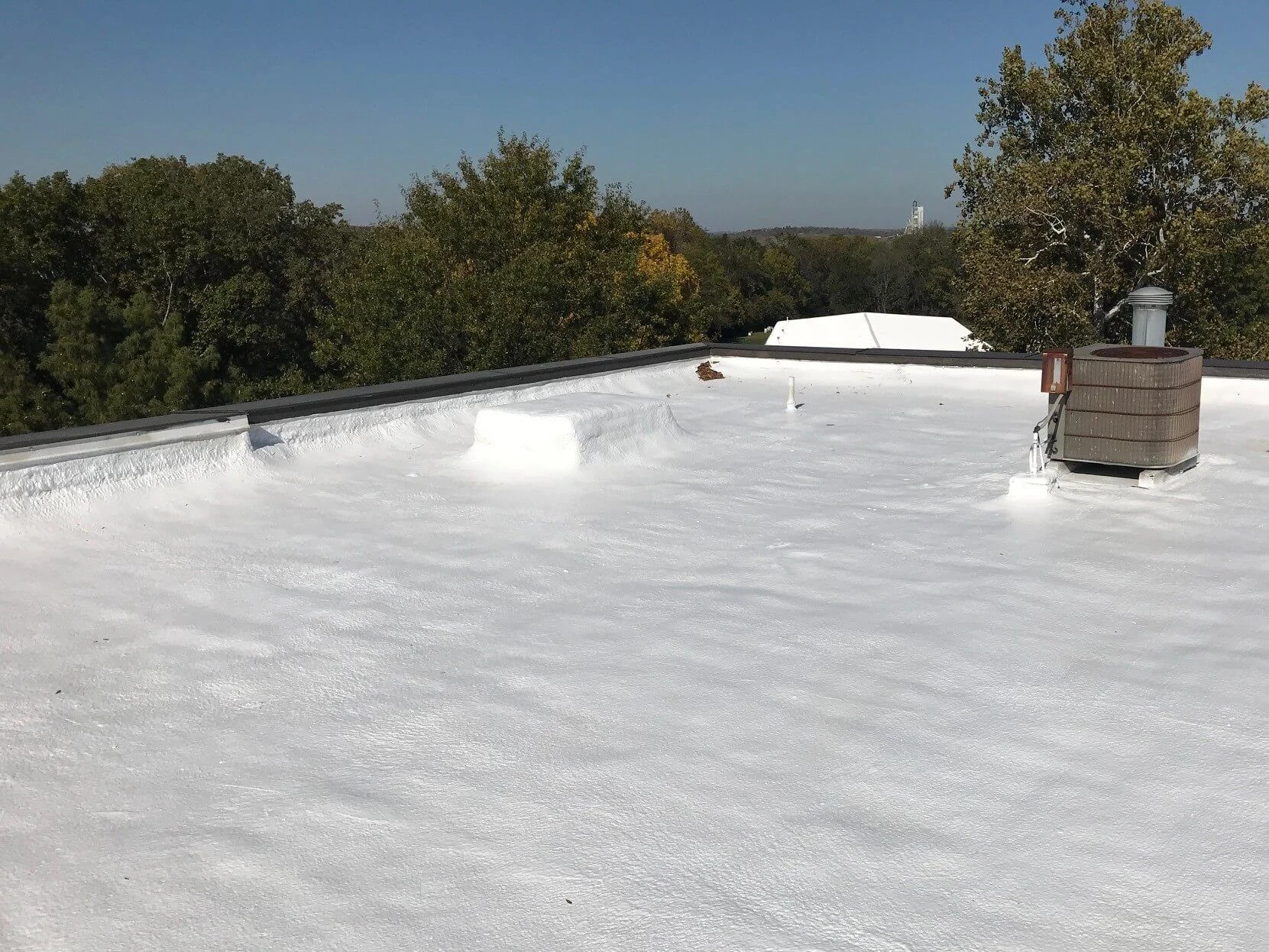
White EPDM is the same rubber compound as the black version with a white surface layer bonded on, so the winter-performance story, splice-tape seams, adhesive-based flashing, freeze-thaw tolerance, carries over largely unchanged. What changes is solar absorption: a white surface reflects a much larger share of incoming solar radiation, keeping the membrane and the deck below it cooler through the long stretches of summer sun that Millcreek Township retail buildings sit under with almost no shading from neighboring structures.
For a retailer running HVAC to keep sales floors comfortable through July heat, that reduced rooftop surface temperature translates into measurably lower package unit run time, and building owners leasing to multiple tenants often see that show up in shared utility cost allocations.
Rooftop Unit Density on Big-Box and Strip Retail Roofs
Retail buildings near the mall corridor typically carry more rooftop units per square foot than a warehouse does, sized to condition individual tenant spaces separately. Each unit is a penetration, a curb, and a thermal bridge point, and on a reflective membrane those curb areas often show up as slightly warmer zones where snow melts first after a lake-effect event, a visual cue we use during winter walks to spot insulation gaps around equipment.
We map curb flashing condition across the whole roof rather than sampling a few units, because a strip retail roof with a dozen or more RTUs has that many more transition points where water intrusion typically starts.
Insulation Behind the Reflective Surface
Reflectivity reduces summer heat gain, but it does nothing for winter heat loss, that's an insulation question entirely. Retail buildings built out in phases as tenant spaces changed hands sometimes have inconsistent insulation thickness from one bay to the next, a patchwork that shows up as uneven frost or snow-melt patterns on the roof surface after a cold night.
We check insulation continuity at tenant demising walls and older patch areas specifically, since those seams are where thickness gaps tend to hide, and a gap there works against the exact energy savings a reflective membrane is supposed to deliver.
Wind Exposure on Open Retail Parking Lots
Big-box and strip retail buildings often sit behind large open parking fields with little windbreak, which means the roof edge can see higher sustained wind than a building tucked into a denser commercial block. That exposure factors into fastening pattern density at the perimeter, and we treat parapet-adjacent zones on these roofs the same way we would on a building facing the open lake, with tighter fastener spacing than the field of the roof requires.
- Fastener density at parapets and roof corners on open, exposed sites
- Curb flashing condition at each individual rooftop unit
- Insulation thickness consistency across tenant demising lines
- Drain and scupper clearance ahead of a fast lake-effect thaw
- Membrane wear in walk paths between rooftop units
- Splice seam condition at older patch or tie-in areas
That inspection list is where most retail-roof problems start, not the membrane field itself, since the field of a white EPDM roof tends to be the most durable and lowest-maintenance part of the whole assembly.
Comparing White EPDM Against White TPO
Owners sometimes ask why we'd spec white EPDM instead of white TPO, since both are reflective. The honest answer is it depends on the building. EPDM's adhesive-seamed laps have a longer real-world track record in this climate than some newer TPO formulations, while TPO's heat-welded seams are generally faster to install and easier to verify with a probe test. Neither is categorically better for every retail building, so the decision comes down to the specific roof's traffic, exposure, and existing tie-in conditions.
On a recover project over an existing EPDM roof in good condition, staying within the EPDM family often makes practical sense simply because flashing details and tie-ins are already established for that membrane type.
Common Questions on White EPDM Roofs
How much does reflectivity actually reduce cooling cost on a retail roof?
It varies by building and equipment age, but the reduction in rooftop surface temperature is measurable and generally shows up in lower package-unit run time through summer.
Does white EPDM stay cleaner or dirtier than black EPDM over time?
White membranes can show dirt and staining more visibly than black ones, though that's a cosmetic issue rather than a performance one, and periodic washing can restore much of the reflectivity.
Will white EPDM hold up the same as black EPDM in winter?
The rubber compound and seam behavior are the same; only the surface color and reflectivity differ, so winter durability is not meaningfully different between the two.
Is white EPDM a good fit for a roof with a lot of rooftop units?
Yes, as long as curb flashing and insulation continuity around each unit are properly detailed, since those transition points matter more than the membrane color on a unit-dense roof.
Can an existing black EPDM roof be recoated white instead of replaced?
In some cases a reflective coating over sound black EPDM is a reasonable interim step, though we evaluate membrane condition first to confirm coating is the right call rather than a full recover.
Ready to review the roof scope?