-
TPO Single Ply Roofing in Erie, PA
TPO Membrane for Millcreek's Retail and Distribution Roofs
TPO has become the default membrane on most of the newer flat-roof commercial construction going up around Erie County, and for good reason: it welds into a monolithic, reflective field that holds up to a range of building types. We install and repair it on everything from big-box retail pads to distribution buildings tucked behind the Wabtec supply corridor.
Why TPO Shows Up on So Many New Roofs Here
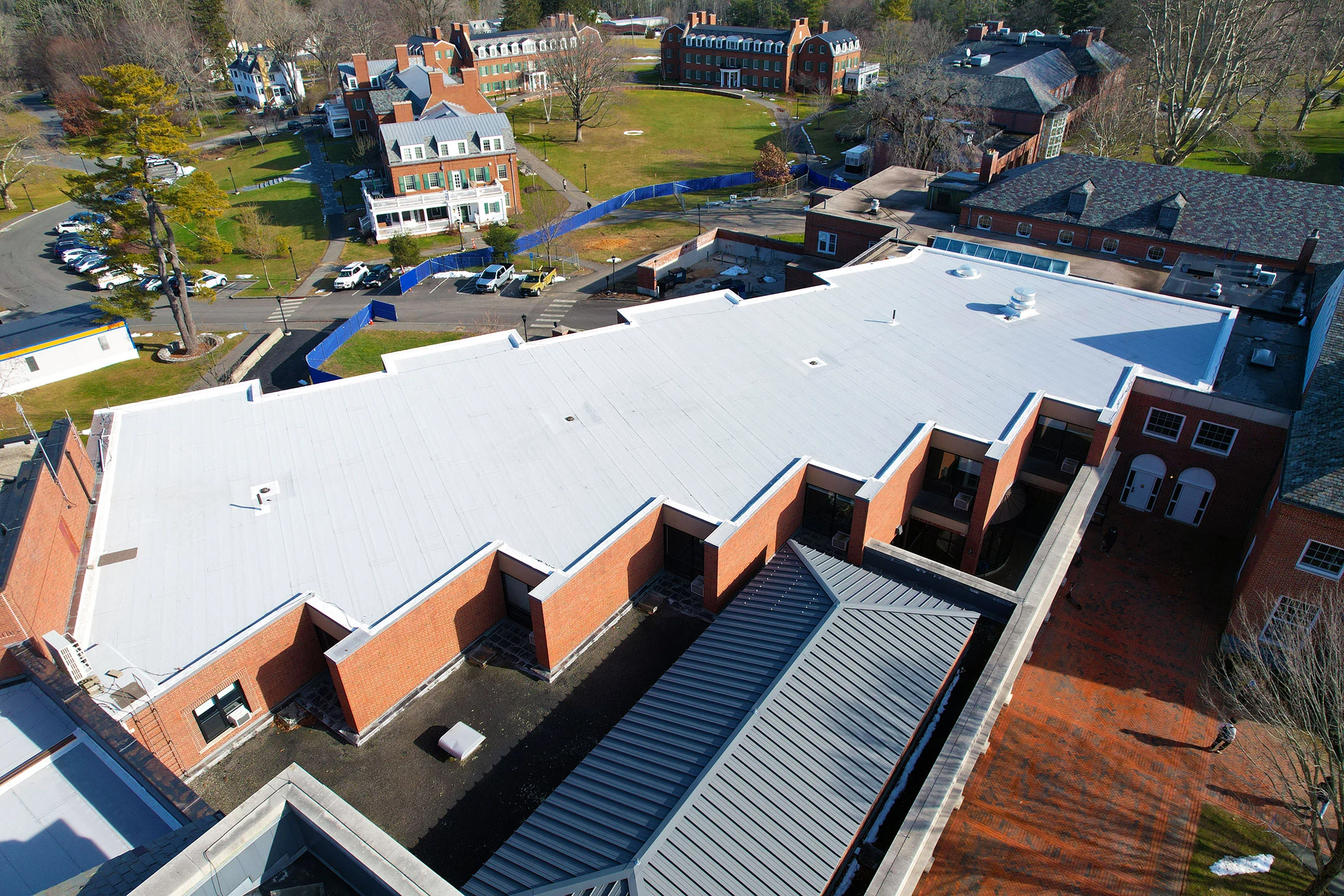
Walk the retail cluster around Millcreek Mall or the big-box strip in Summit Township and most of what's overhead is white TPO. It's become the standard spec for new low-slope construction because the heat-welded seams create a continuous membrane without the multiple layers older systems relied on, and the material handles the wide temperature swings of a Lake Erie winter-to-summer cycle without the seam failures we used to see on older single-ply products.
It also shows up heavily on additions and expansions, since a TPO field ties cleanly into an existing TPO roof without the compatibility headaches that come with mixing membrane chemistries.
Reflectivity Cuts Summer HVAC Load, But Winter Still Rules the Budget
A white TPO membrane reflects a meaningful share of summer solar heat gain, which shows up as shorter rooftop unit run cycles and a lower cooling bill during Erie's humid stretch from June through August. Owners notice that difference, especially on buildings with a lot of roof area relative to floor space, like a single-story big-box store.
But Erie's heating season runs far longer than its cooling season, and that's where the bigger dollar figure sits. A reflective membrane does nothing for heat loss through the deck. We pair every TPO install with an insulation package sized for this climate, because a bright white roof over thin or compressed insulation still bleeds heating dollars all winter.
Seam Welding in Cold-Weather Installs
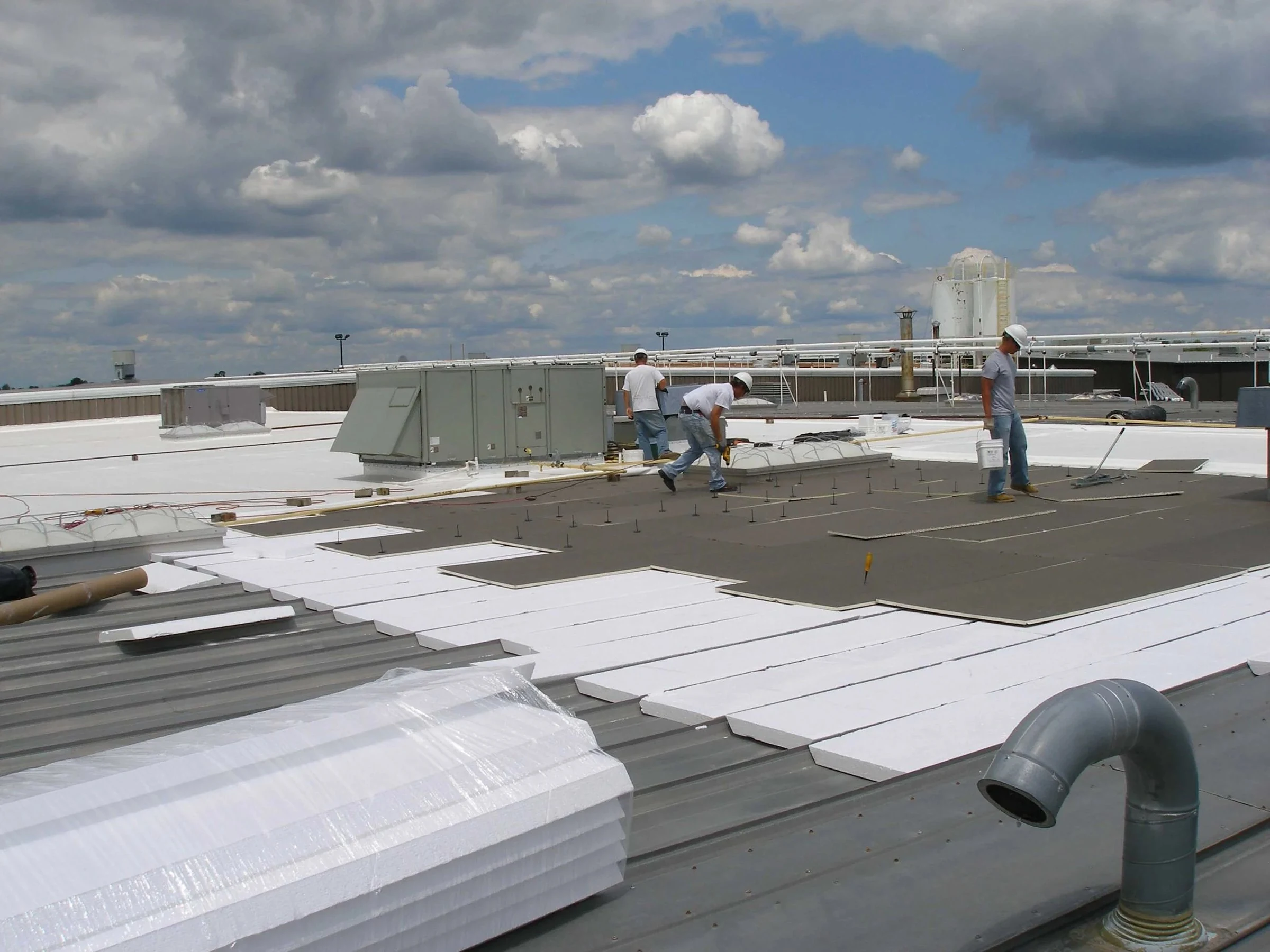
Hot-air welding TPO seams is sensitive to ambient temperature and membrane surface temperature, and Erie's install season narrows fast once lake-effect bands start rolling in. We schedule TPO work in the spring and fall windows when possible and adjust weld settings and lap procedures when a job has to run into colder weather, checking every seam with a probe before we sign off on it.
Rushing a cold-weather weld is one of the fastest ways to get a seam that looks bonded but isn't, and that failure doesn't show up until the first heavy snowmelt finds it.
Snow and Ice Behavior on a TPO Field
TPO is installed flat or on a low slope, so it holds snow rather than shedding it the way a steep metal roof does. That means ponding and refreeze around drains and low points is a normal winter condition we design around, not a defect. Scuppers and internal drains need to stay clear through the freeze-thaw cycle, because a blocked drain under a foot of packed snow backs water up against parapets and rooftop curbs.
We check drain paths and tapered insulation crickets as part of every TPO inspection, since a roof that drains properly in October can still develop a low spot by February once snow load compresses the insulation underneath it.
Where We're Installing TPO Most
- Millcreek and Summit Township retail pads and big-box stores
- Distribution and warehouse buildings supporting Wabtec's supplier network
- Medical office buildings and outpatient clinics
- School additions and municipal facility roofs
- Hotel and hospitality roofs near the bayfront and Splash Lagoon corridor
- Multi-tenant office and flex-space buildings
Choosing Thickness and Attachment Method
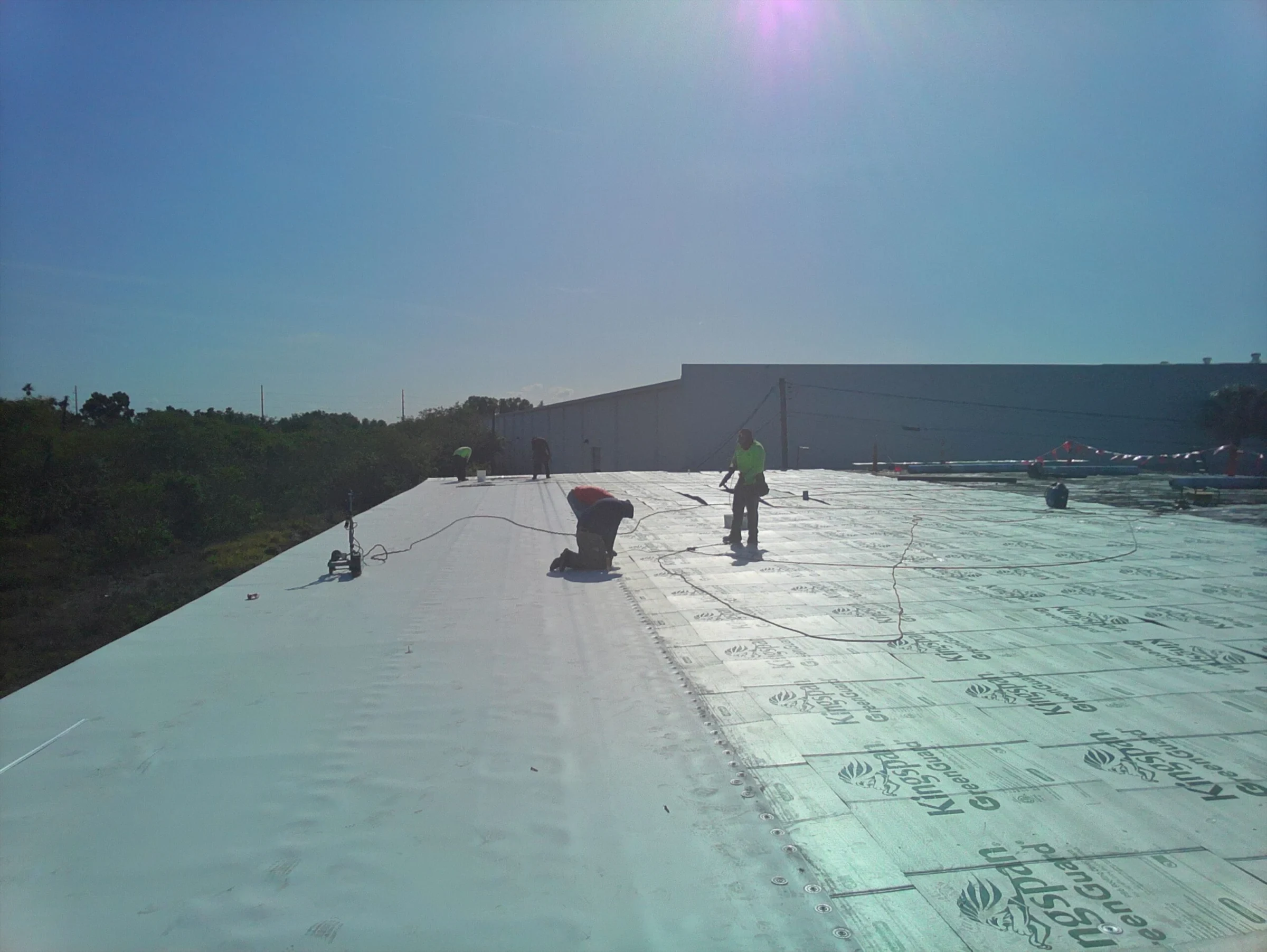
We spec 60-mil TPO on most standard commercial applications and step up to 80-mil on roofs with heavier foot traffic, rooftop equipment density, or exposure to mechanical damage from snow-removal equipment. Attachment method matters just as much: mechanically fastened systems perform well on most buildings, but we lean toward fully adhered assemblies on taller structures and open sites where wind uplift off Lake Erie is a bigger factor than it would be on a sheltered inland building.
Fastening pattern also has to account for snow drift loading at parapets, where the membrane sees concentrated stress that the open field doesn't.
Snow-Removal Traffic and Membrane Wear
Flat roofs in Erie sometimes need active snow removal when accumulated depth threatens to exceed a building's rated load, and that work puts foot traffic and equipment directly on the membrane during the coldest, most brittle stretch of the year. TPO handles cold-weather foot traffic better than some alternatives, but metal shovels and aggressive plastic tools still risk scuffing or puncturing the surface if a crew isn't careful about technique.
We walk owners through safe snow-removal practices as part of every TPO install — leaving a buffer layer of snow rather than scraping to bare membrane, and using tools rated for roof work rather than whatever's on hand. A membrane that gets damaged during snow removal usually fails at exactly the wrong moment, mid-storm, when access and repair conditions are worst.
Common TPO Questions
Does TPO reflectivity actually help in a climate with 100-plus-inch winters?
It helps during the cooling season, but the bigger energy story here is insulation performance through six months of heating load. We treat reflectivity and insulation as separate line items, not one package deal.
How do you weld TPO seams when temperatures drop?
We adjust weld temperature and speed for colder ambient conditions and probe every seam before accepting it. When conditions get too marginal, we push the work to a warmer window rather than gamble on a weld that won't hold.
What thickness of TPO do you recommend for a warehouse roof?
Most warehouse roofs do fine on 60-mil, but buildings with heavy rooftop equipment traffic or snow-removal activity often justify the extra durability of 80-mil.
Can TPO handle standing water from snowmelt?
Short-term ponding during melt cycles is normal and TPO tolerates it well. Persistent ponding beyond 48 hours usually points to a drainage or slope problem we'd want to correct, not a membrane limitation.
How long does a TPO roof last in Erie's freeze-thaw cycle?
A properly installed and maintained TPO system holds up for a long service life here, provided seams stay intact and drainage keeps water from sitting and refreezing against the membrane repeatedly.
Ready to review the roof scope?