-
Silicone Roof Coating in Erie, PA
Restoring an Aging Roof With Silicone Coating Instead of Tear-Off
Silicone coating lets a building owner extend a roof's service life without the disruption and capital cost of a full tear-off, provided the existing membrane is structurally sound underneath. Around Erie Insurance's downtown campus and the office towers nearby, where a full reroof means coordinating around active tenants and business operations, that restoration path often makes more sense than replacement on the same schedule.
What a Roof Needs to Qualify for Coating
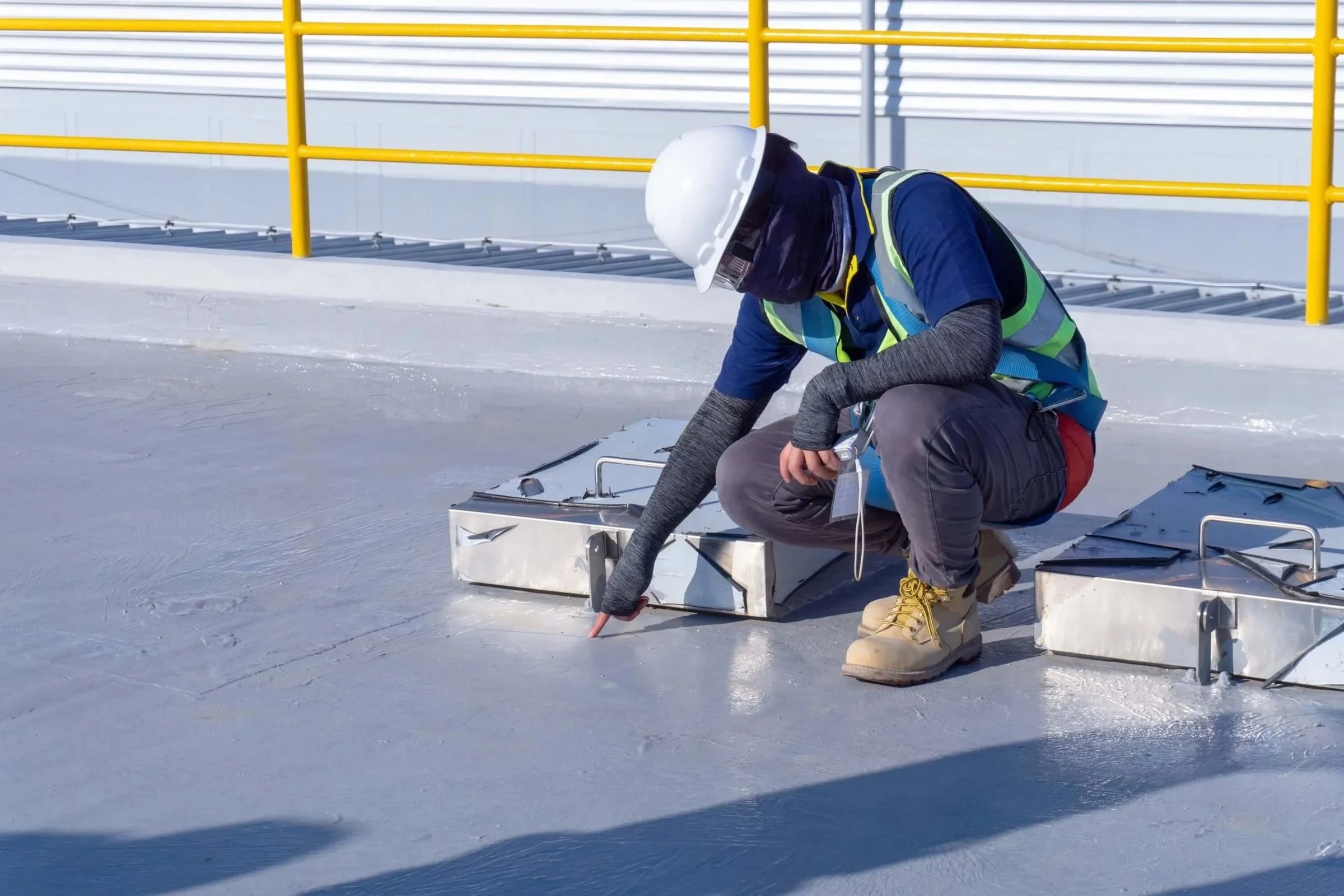
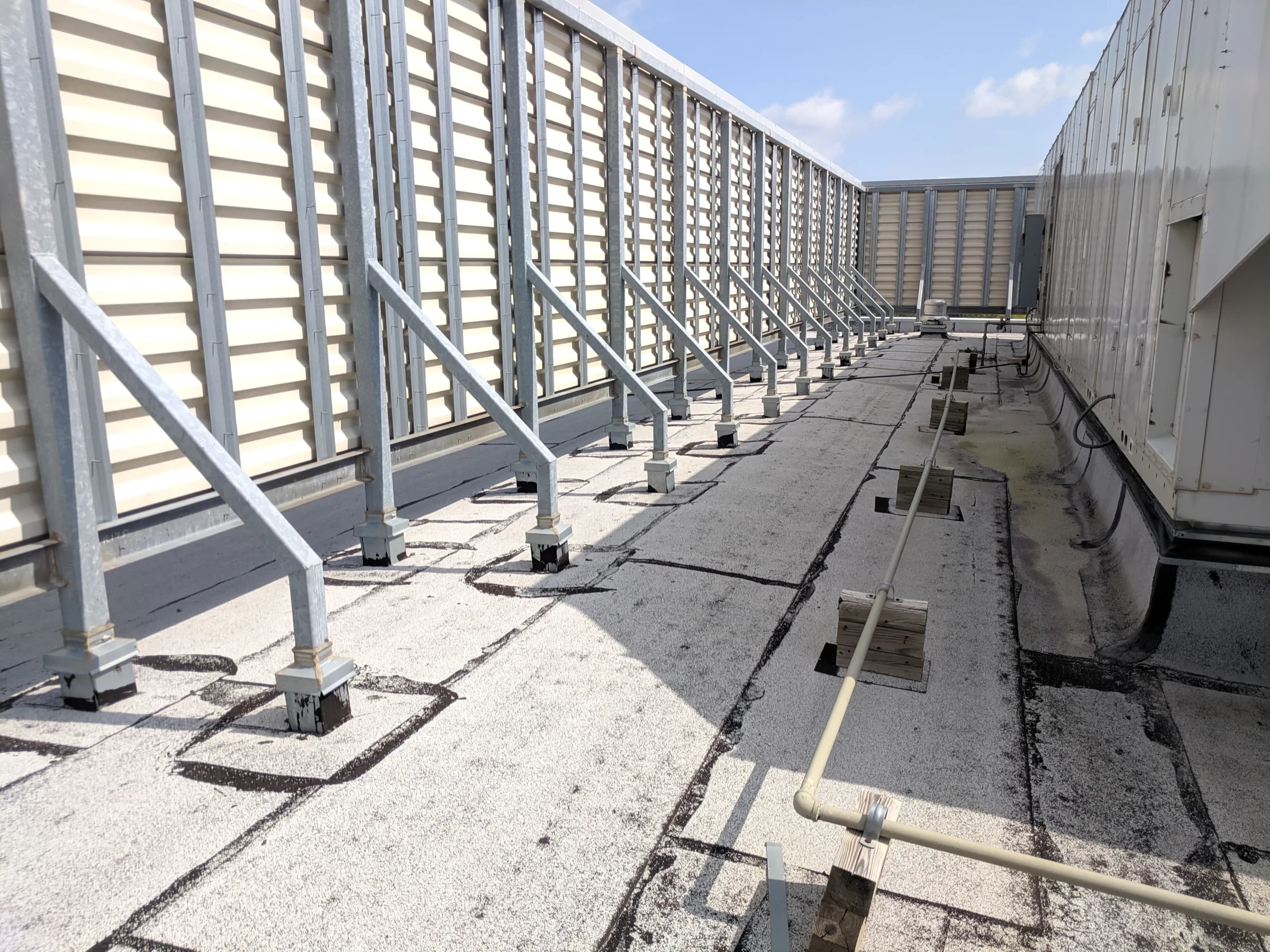
Not every aging roof is a coating candidate. We start with core cuts to confirm the insulation underneath is dry, because coating over wet insulation just seals moisture in and accelerates deck deterioration out of sight. The existing membrane also needs to be structurally intact, no widespread splits, no deteriorated flashings beyond repair, and no active ponding that a coating alone can't correct.
Where a roof passes that evaluation, coating can add meaningful years of service life at a fraction of tear-off and replacement cost, which is why we treat the core-cut assessment as the real decision point rather than age or appearance alone.
We also check flashing condition at every curb, wall termination, and penetration before recommending coating, since a coating system only performs as well as the flashing details it's applied over. A membrane field in good shape sitting under failed counterflashing is still a roof with an active leak path, coating or no coating.
Ponding Water and Silicone's Advantage
Silicone coating has a real performance advantage over acrylic in one specific condition: standing water. Older downtown roofs with minimal slope, or roofs where drains have shifted slightly over decades of settling, often hold water in low spots after a thaw, and that ponding is exactly where silicone's hydrolysis resistance outperforms acrylic coatings, which can soften or degrade faster under prolonged wet exposure.
That matters directly in Erie's climate, where a heavy lake-effect snow event followed by a rapid thaw can leave low points holding water for days before it fully evaporates or drains. A silicone-coated roof handles that cycle far better over its life than a coating not formulated for standing water exposure.
Ice Formation at Drains During a Fast Thaw
When temperatures swing quickly after a heavy snow event, common in a lake-effect pattern, meltwater can refreeze at a drain bowl or scupper before it fully clears the roof, backing water up behind the ice and forcing it toward low points or flashing edges instead. A coated roof with properly functioning drains handles that cycle better than one with drains already compromised by debris or minor settling, which is why drain condition gets checked as part of every coating evaluation, not treated as a separate maintenance item.
Coating itself doesn't fix a drainage problem; it restores and protects the membrane surface. Where we find drain or slope issues during evaluation, we address those first, sometimes with tapered insulation crickets built into low spots, before applying coating over the corrected area.
Reflectivity and Downtown Cooling Load
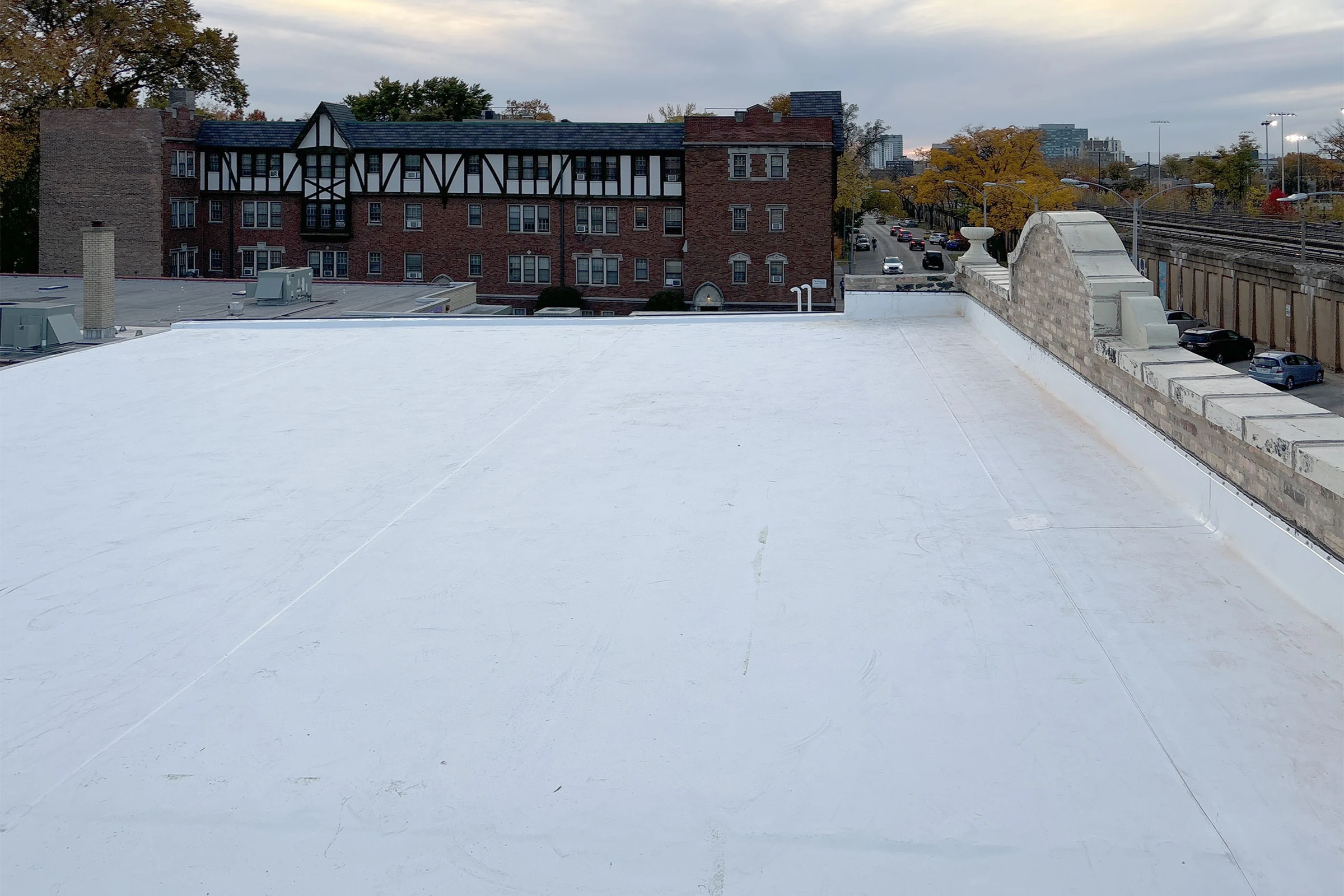
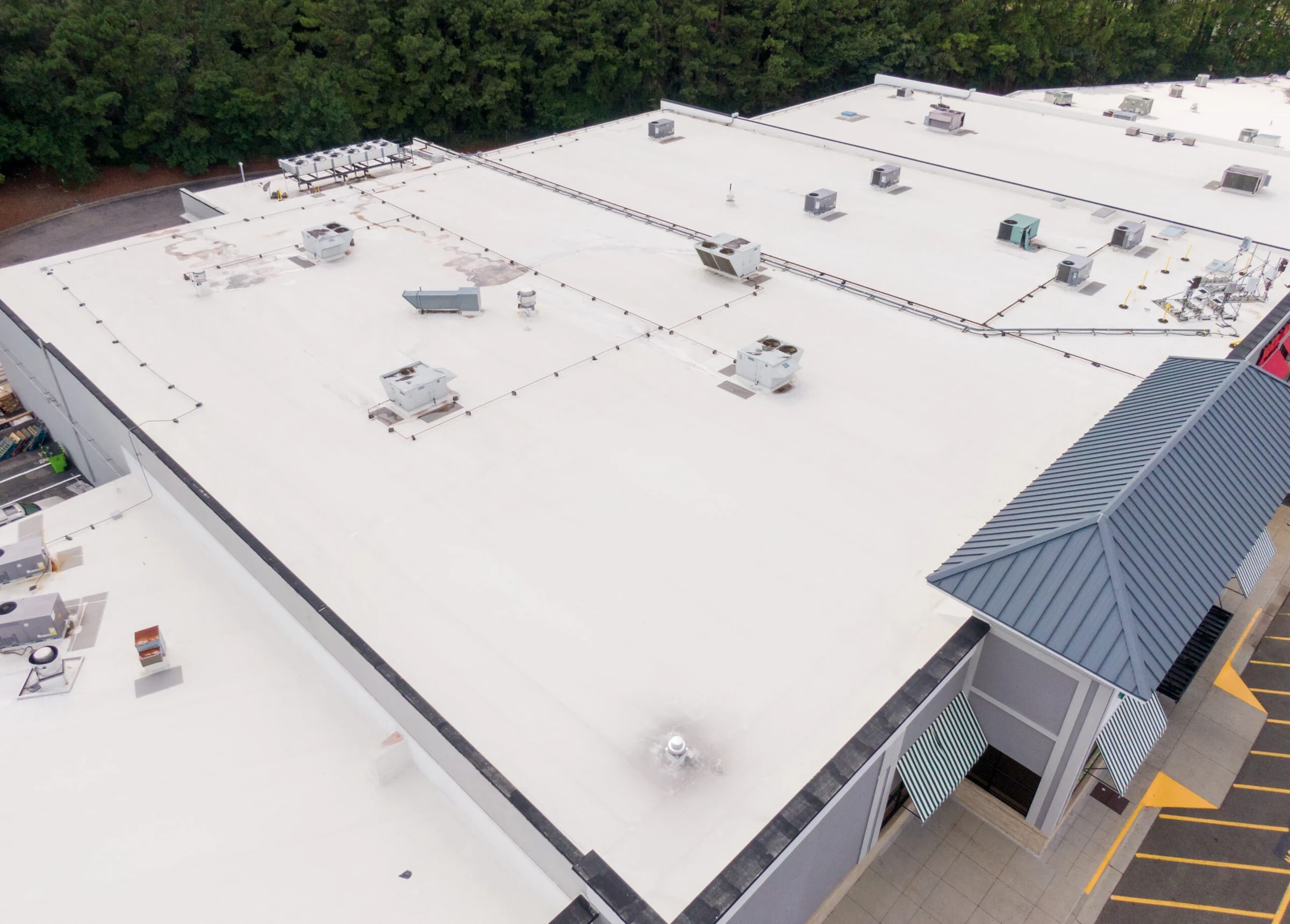
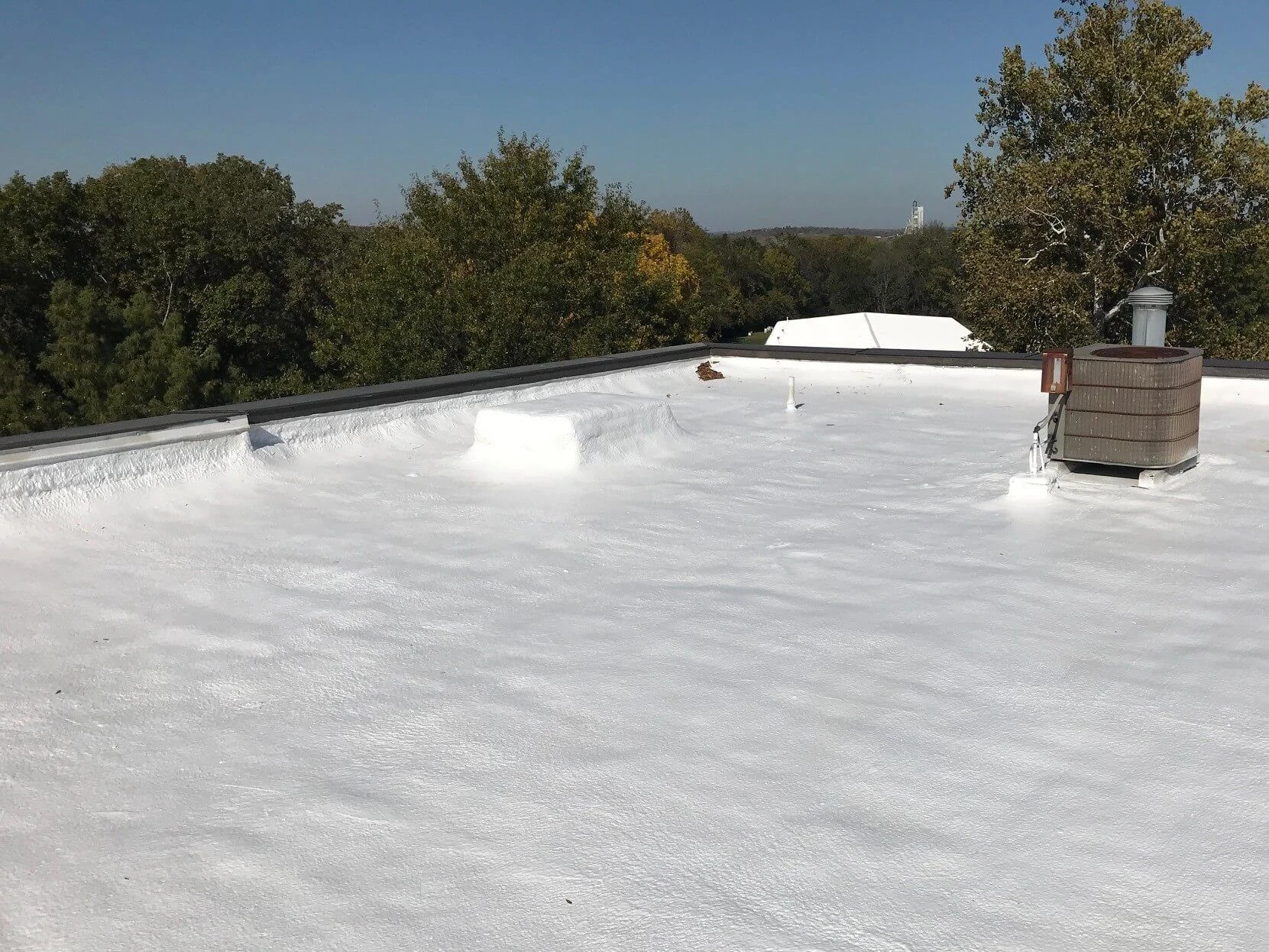
Most silicone coatings go down white or light-colored, and that reflectivity delivers the same summer cooling benefit a new white membrane would, without the cost of full replacement. For a downtown office tower running rooftop or penthouse mechanical equipment through a full Erie summer, that reflectivity reduction in rooftop surface temperature translates into real, measurable savings on cooling load.
- Core cuts confirming dry insulation before any coating work begins
- Drain and scupper function, corrected before coating is applied over that area
- Ponding history documented across at least one full freeze-thaw cycle
- Membrane condition at flashings, seams, and existing patch areas
- Coating thickness verified at application to meet manufacturer mil specifications
- Recoat interval scheduled based on UV exposure and traffic patterns
That evaluation list is what separates a coating project that actually extends roof life from one that just delays a bigger repair by a year or two.
Maintenance Cycle After Coating
A silicone-coated roof isn't a one-time fix and forget. Reflectivity and protective thickness both degrade gradually with UV exposure and weathering, so we set a recoat interval based on the specific roof's exposure and traffic rather than a generic number. A downtown roof with heavy sun exposure and periodic maintenance foot traffic needs a shorter recoat cycle than a shaded, low-traffic section of the same building.
We build that maintenance schedule into the proposal up front, since a coating system is only a good financial decision for an owner who follows through on the recoat cycle rather than treating the initial application as the end of the project.
Property managers overseeing several downtown buildings sometimes stagger recoat cycles across a portfolio deliberately, spreading the cost across different budget years instead of facing every roof's maintenance bill in the same season. We help lay out that kind of multi-year schedule when it's useful to the owner's planning.
Common Questions on Roof Coating Restoration
How do we know if a roof is too far gone for coating?
Widespread wet insulation, structural deck issues, or extensive membrane failure beyond flashing-level repair usually rule out coating in favor of full replacement.
Does silicone coating stop an active leak immediately?
Active leaks need to be addressed and dried out before coating, since coating is a restoration and protection layer, not an emergency repair method on its own.
How long does a silicone coating typically last before recoating is needed?
It depends heavily on UV exposure and traffic, which is why we set a building-specific recoat schedule rather than quoting a single universal number.
Is coating cheaper than a full tear-off and replacement?
Generally yes, often substantially, but it only makes financial sense on a roof that passes the core-cut and structural evaluation first.
Can coating be applied in cooler fall weather before lake-effect snow arrives?
Yes, within the manufacturer's temperature and humidity application window, which is part of why we schedule coating projects for a specific weather window rather than a fixed calendar date.
Ready to review the roof scope?