-
Commercial Roofing Contractors Downtown Erie, PA
Commercial Roofers in Downtown Erie
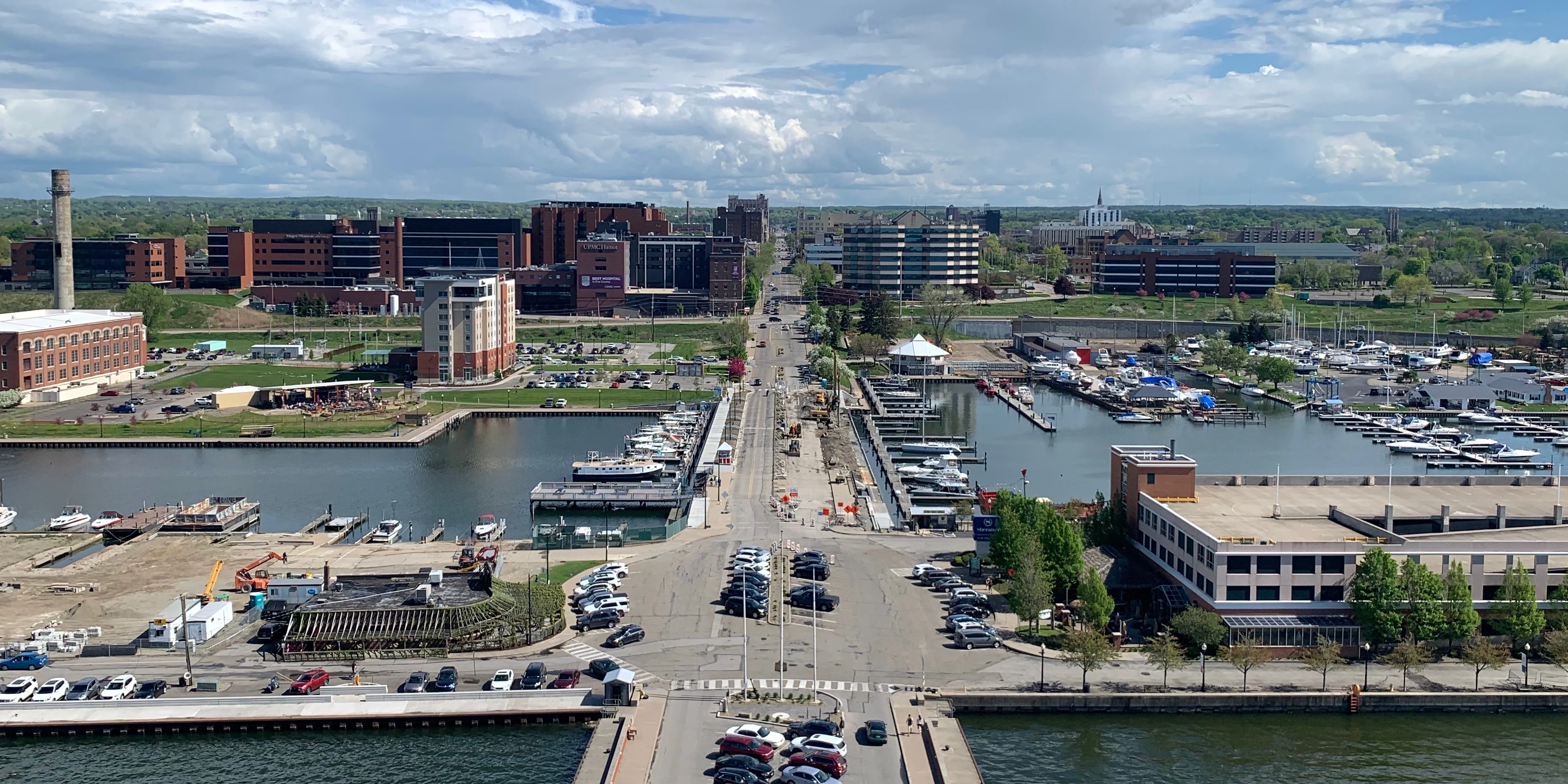
Commercial roofers serving Downtown Erie should document leak sources, wet insulation, drainage, edge details, penetrations, and repair history before recommending a scope. Downtown Erie carries the county's densest commercial roof stock, running from Erie Insurance's headquarters campus near State Street down to the bayfront hotels along Presque Isle Bay. Older brick office buildings sit next to modern glass towers here, and the roofing work downtown has to account for that range of construction eras within a few blocks of each other.
Insurance Campus and Office Tower Roofing
The buildings that make up Erie Insurance's downtown campus, along with the surrounding office towers, run substantial mechanical loads across roofs that mix low-slope membrane fields with mechanical penthouses and equipment screens. Reflectivity and insulation performance matter directly to the utility cost of conditioning that much occupied office space, and a membrane choice on a building this size can move the summer cooling bill meaningfully if the insulation underneath is doing its job. We evaluate insulation condition on these roofs with core sampling before recommending any recover, since a large office building has too much at stake to guess.
Rooftop mechanical density on downtown office buildings also means penetration count is higher than a typical suburban office building, and flashing detail work around that equipment gets more of our attention than the open membrane field during inspections.
Some of the campus roofs bridge additions built decades apart, similar to what we see at large manufacturing facilities elsewhere in the county, and insulation depth is rarely consistent from one addition to the next. Bringing that insulation performance closer together across sections is often where the more meaningful energy savings sit on a campus this large, rather than in the membrane surface alone.
Bayfront Hotel Roofs
The hotels along the bayfront run pool mechanicals, laundry exhaust, and banquet-kitchen ventilation through their roofs, on top of standard guest-room HVAC penthouses. Guests can't be displaced for a slow leak the way a suburban tenant can shut down a section of retail floor, so we treat penetration flashing and drain condition at these properties as priority inspection items rather than routine checks. Bayfront wind exposure off Presque Isle Bay adds another layer, since these buildings take direct lake wind without the wind-break effect that inland downtown blocks provide each other.
Convention and event traffic at the bayfront hotels means occupancy stays high through more of the year than a typical suburban property, which narrows the maintenance windows available for anything beyond an emergency repair. We work with hotel facilities staff on scheduling well ahead of a planned recover or reroof rather than trying to find an open week on short notice.
Older Brick Storefront and Office Buildings
Away from the insurance campus and bayfront, downtown Erie still has a stock of older brick commercial buildings with flat or low-slope roofs behind historic facades. These roofs need the same careful parapet and cornice flashing work we see in other older downtown districts across the region, where a standard membrane detail can create new leak paths at transitions that weren't designed for modern roofing systems. We approach these buildings with that construction history in mind rather than applying a generic commercial roofing spec.
What We Handle in Downtown Erie
Recurring scope across the district:
- Insulation and reflectivity evaluation for large office campus roofs
- Priority flashing and drain inspection at occupied bayfront hotels
- Wind-exposure fastening and edge-metal review for buildings along the bay
- Parapet and cornice flashing repair on older brick office and storefront buildings
- Core sampling ahead of any recover recommendation on large mechanical-heavy roofs
- Emergency leak response coordinated around occupied downtown operations
Snow Load and Drainage in a Dense Downtown Footprint
Downtown Erie's buildings sit close enough together that snow removal and drift management interact across property lines more than they do in the county's suburban corridors. A taller building can shade a shorter neighboring roof from sun exposure long enough to slow snowmelt and extend load duration, and we take that neighboring-building effect into account when assessing drainage and structural load on downtown roofs rather than evaluating each building in isolation. Combined with the heavy lake-effect totals the whole county sees, that shading effect is worth checking before assuming a downtown roof handles snow the same way a freestanding suburban building does.
Questions Downtown Erie Property Managers Ask
Would a reflective roof meaningfully cut our office building's cooling costs?
It can, provided insulation underneath is intact. We confirm that with core sampling before recommending a recover on a large mechanical-heavy roof, since the color change alone won't deliver the full expected savings.
How fast can you respond to a leak at an occupied hotel?
We prioritize active leaks at occupied hotels ahead of routine scheduling, given guest impact and the equipment tied to pool and kitchen operations.
Does our building's older brick construction change how you approach the roof?
Yes. Parapet and cornice details on older downtown buildings need careful flashing work to avoid creating new water paths at transitions a standard membrane detail wasn't designed for.
Why does snow seem to stay longer on our roof than on a similar suburban building?
Taller neighboring buildings downtown can shade a roof and slow snowmelt, extending how long load sits compared to a freestanding building with full sun exposure.
Do bayfront buildings need different wind detailing than the rest of downtown?
Generally yes. Buildings along Presque Isle Bay take more direct wind exposure than inland downtown blocks, which affects fastening patterns, edge-metal recommendations, and how we plan staging in exposed areas.
Ready to review the roof scope?